Wigmore Primary School Logo

Wigmore Primary School

  • [email protected]
  • 01582 616101
  • About us
    • Headteacher’s Welcome
    • Staff list
    • Pupil premium
    • Aims, Vision and Values
    • Online Safety Updates
    • OFSTED
    • Performance
    • School Prospectus
    • Key policies
    • Safeguarding
    • Contact us
    • Vacancies
    • Governors
  • Parents Information
    • Curriculum letters
    • Friends of Wigmore
    • School Calendar
    • Inclusion
    • Term Dates and Events
    • Admissions
    • Letters
    • School Uniform
    • Phonics Resources for Parents
    • School Meals
      • Free School Meals
      • Milk & Fruit
      • School Meals Menus
  • Quality of Education
    • Year Group Overviews
    • English
      • Writing
      • Reading
    • Maths
    • Science
    • Phonics: RWI
    • EYFS
    • PE and Sports Premium
    • Computing
    • French
    • RE
    • PSHE
      • Jigsaw
      • Smart School Council
    • Design and Technology
    • History
    • Geography
    • Art
    • Music
  • School Blogs
    • EYFS Blog
    • Year 1 Blog
    • Year 2 Blog
    • Year 3 Blog
    • Year 4 Blog
    • Year 5 Blog
    • Year 6 Blog
    • Headteacher’s Blog
    • PE Blog
    • Digital leaders
Wigmore Primary School Logo
  • About us
    • Headteacher’s Welcome
    • Staff list
    • Pupil premium
    • Aims, Vision and Values
    • Online Safety Updates
    • OFSTED
    • Performance
    • School Prospectus
    • Key policies
    • Safeguarding
    • Contact us
    • Vacancies
    • Governors
  • Parents Information
    • Curriculum letters
    • Friends of Wigmore
    • School Calendar
    • Inclusion
    • Term Dates and Events
    • Admissions
    • Letters
    • School Uniform
    • Phonics Resources for Parents
    • School Meals
      • Free School Meals
      • Milk & Fruit
      • School Meals Menus
  • Quality of Education
    • Year Group Overviews
    • English
      • Writing
      • Reading
    • Maths
    • Science
    • Phonics: RWI
    • EYFS
    • PE and Sports Premium
    • Computing
    • French
    • RE
    • PSHE
      • Jigsaw
      • Smart School Council
    • Design and Technology
    • History
    • Geography
    • Art
    • Music
  • School Blogs
    • EYFS Blog
    • Year 1 Blog
    • Year 2 Blog
    • Year 3 Blog
    • Year 4 Blog
    • Year 5 Blog
    • Year 6 Blog
    • Headteacher’s Blog
    • PE Blog
    • Digital leaders
Wigmore Primary School Logo
  • About us
    • Headteacher’s Welcome
    • Staff list
    • Pupil premium
    • Aims, Vision and Values
    • Online Safety Updates
    • OFSTED
    • Performance
    • School Prospectus
    • Key policies
    • Safeguarding
    • Contact us
    • Vacancies
    • Governors
  • Parents Information
    • Curriculum letters
    • Friends of Wigmore
    • School Calendar
    • Inclusion
    • Term Dates and Events
    • Admissions
    • Letters
    • School Uniform
    • Phonics Resources for Parents
    • School Meals
      • Free School Meals
      • Milk & Fruit
      • School Meals Menus
  • Quality of Education
    • Year Group Overviews
    • English
      • Writing
      • Reading
    • Maths
    • Science
    • Phonics: RWI
    • EYFS
    • PE and Sports Premium
    • Computing
    • French
    • RE
    • PSHE
      • Jigsaw
      • Smart School Council
    • Design and Technology
    • History
    • Geography
    • Art
    • Music
  • School Blogs
    • EYFS Blog
    • Year 1 Blog
    • Year 2 Blog
    • Year 3 Blog
    • Year 4 Blog
    • Year 5 Blog
    • Year 6 Blog
    • Headteacher’s Blog
    • PE Blog
    • Digital leaders
  • [email protected]
  • 01582 616101
Author Archives Roma Bloomfield

Year 6 blog- Almost time for Summer time!

30th March 2025Roma Bloomfield

Welcome back to the Year 6 blog. We have had had an action packed spring term as we have been gearing up to the SATs. The children have worked so hard this term, in all areas, and we are so proud of them. Boosters have been incredibly successful and we are so grateful to all the children, parents and staff who have made this possible. We are confident that the children have gained so much from these additional sessions but we are ALL looking forward to having our mornings and afternoons back! Not long to go now… Only a few more weeks until we can take a breath and let our hair down a little- that is until we start rehearsing for our end of year performance! Keep going Year 6, we know you can do it!

English

Reading- Poetry and non-fiction

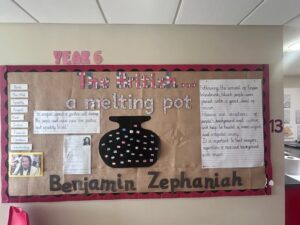
This half term, in our reading lessons, we’ve been diving into the intriguing world of poetry and non-fiction. We studied a thought-provoking poem called “The British” by the late Benjamin Zephaniah. It beautifully encapsulates our vibrant British culture, portraying it as a melting pot teeming with individuals from varying backgrounds, races, and religions. What we found particularly striking is how Zephaniah discusses essential themes of equality, justice, and respect, referring to the British people as the key ingredients that make up our nation. His clever use of imagery allowed us to explore the significance of these elements in shaping society, and it’s safe to say it’s left a lasting impression on all of us!

Alongside our poetic excursion, we’ve been sharpening our reading skills. We’ve focused on inference, retrieval, and making predictions, which has been both challenging and rewarding! We’ve also delved into a range of vocabulary, exploring what these key terms mean and how they relate to our life in Britain today.
On another note, we’re currently engrossed in a non-fiction book centered around World War II, tying in perfectly with our history unit on Conflict and Resolution. The discussions we’ve had surrounding fact and opinion—especially distinguishing between fact and opinion presented as facts—have been particularly enlightening. Our efforts to tackle those tricky three-mark questions where we justify our thoughts with evidence from the text are bearing fruit too!

It’s been a busy few weeks, but our exploration of literature and history feels ever so worthwhile.

Writing – Discussions and Advice

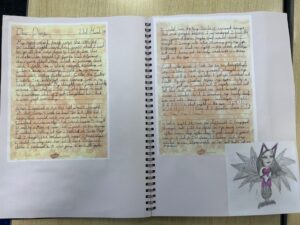
As we dive into this half term, our young writers have been busy honing their skills in crafting discussion texts and forming balanced arguments. It’s quite inspiring to watch them embark on this journey! We kicked things off by exploring a variety of grammar skills and writing techniques. The children eagerly embraced concepts like levels of formality and passive voice, which are essential for making their writing more sophisticated. We’ve also been focusing on building cohesion across paragraphs using different devices, including handy sentence signposts.

Moreover, we’ve introduced the nuances of punctuation – semi-colons, colons, and dashes have become our new best friends! Understanding how to use subordinate clauses effectively has added an extra layer of complexity to their writing, which I must say, they’ve tackled impressively.

A particularly engaging part of this process was allowing the children to choose their own discussion questions. It’s fascinating to see them dive into topics that spark their interest. They researched passionately, weighing arguments for and against. The shift to writing formally encouraged them to explore alternative vocabulary, helping them articulate their points with a more polished touch.

Take a look at some of our thought-provoking discussion texts:

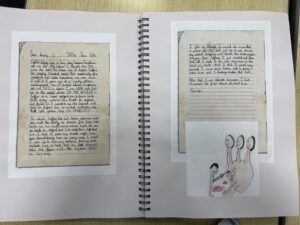
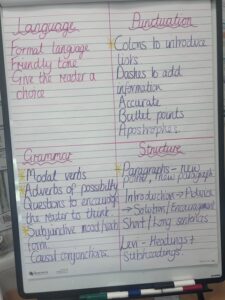
Currently, we’re having a lot of fun learning to write advice through “agony aunt/uncle” letters. The children are grasping the art of reading a problem letter, empathising with the writer, identifying core issues, and formulating thoughtful solutions. They absolutely thrived during the product goals lesson, where we identified the key language, grammar, and punctuation essential for effective advice writing.

Here is their final list of product goals and writers’ craft moves:
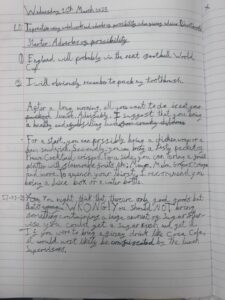
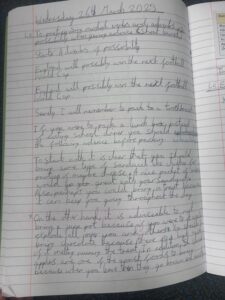
Recently, they practised their skills by offering advice to a hypothetical “new student” on what to pack for their packed lunch. It’s delightful to see their creativity flow, and I can’t wait to see how they continue to grow as confident young writers! Take a look at our fantastic pieces:
Science – Evolution

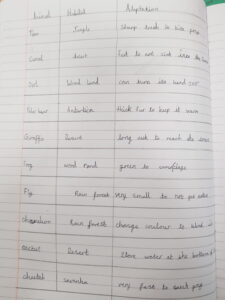
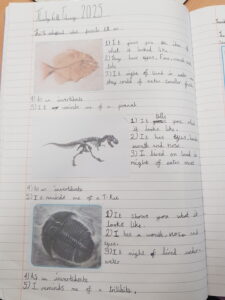
In Year 6 Science this half term, I wanted to share what your children have been exploring regarding the fascinating world of living things and their adaptations. Building on the foundational knowledge gained in previous years, particularly during the Year 3 rocks unit, pupils have delved deeper into how living things have evolved over time, thanks to the clues left behind in fossils.

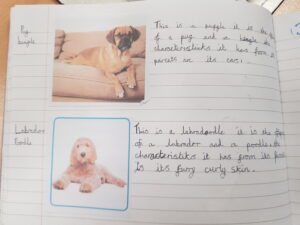
We started by revisiting the concept of fossils and their significance in revealing the history of life on Earth. Pupils learnt that living organisms produce offspring of the same kind, but that these babies usually vary slightly from their parents, much like the differences seen when Labradors and poodles are crossed. This variation helps species adapt to their environments, a key theme for our lessons.

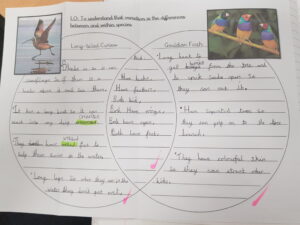
Throughout the unit, children discovered amazing adaptations—like the growing neck of the giraffe. Understanding these adaptations will lead us into discussions about evolution, highlighting how traits that help survival are passed down through generations. We will also be exploring how environmental changes can threaten species, with a focus on the challenges posed by climate change and habitat loss.

Children will be introduced to remarkable figures in science, such as Mary Anning and Charles Darwin, whose pioneering work has shaped our understanding of evolution. By the end of the unit, we aim for pupils to appreciate that evolution is not a matter of choice; it’s a slow process that occurs as living organisms adapt to their changing environments.
History – Conflict and Resolution

This unit is designed to expand pupil’s chronological knowledge of British History beyond 1066. This unit will give pupils knowledge of the First and Second World Wars as well as how conflict still continues in the world today. In preparation for beginning this unit and to excite pupils about the content, activities from the Discovery box can be sent home. 

The unit begins with an exploration of how the First World War began, looking at the assassination of Archduke Franz Ferdinand as the catalyst. Pupils will also understand the role of the British Empire and how it wasn’t solely Britain who fought in the war. Pupils will then learn about the people who fought in the war, understanding that Britain needed the support of the colonies and laws like conscription to build its army. This leads into the next lesson where pupils learn about trench warfare in depth. There are also option to discover the experiences of soldiers using a diary entry, and exploring the Battle of the Somme. As the unit progresses, pupils will learn about women’s roles in the first world war, how they took on the jobs that men could no longer do while they were at war, their work in the munitions factories, and how their significant contributions led to them receiving the right to vote. Pupils will learn about how the First World War ended, the signing of the armistice, and the after-effects of the war on the people of Britain. 

The unit then moves into exploring who Hitler was and how his actions led to the outbreak of the Second World War. Pupils will learn about the chronology of the war and how it was fought as well the impact on Britain. Pupils will also have the opportunity to look at the impact of the wars on their local area. As the unit progresses, pupils learn about how Britain rebuilt after the war, how the welfare state was created, and how people came from the colonies to fill the labour shortage. The unit concludes with a lesson on how countries maintain peace. Pupils will learn about how and why the United Nations was formed. 

At the end of the unit, pupils will draw all their knowledge and understanding together to answer the enquiry question: How and why did Britain fight in two world wars, and how did they change British society? Pupils should be encouraged to use the knowledge they have gained to outline the impact of the First World War and then the Second World War on Britain. They will finally conclude their thoughts about what they have learned about conflict and resolution.

Remember that war is not abstract, historical, or faraway for all children: Throughout this unit, be mindful of any pupils whose lives may have been affected by war.

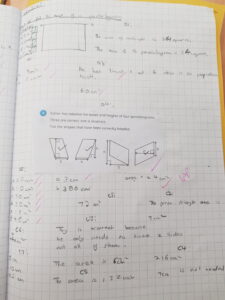
Maths –  Area, perimeter and volume


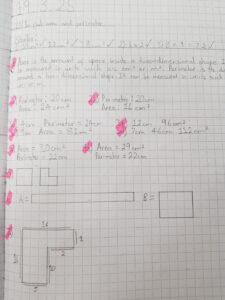
Our recent mathematics unit centred on the exploration of areas and perimeters of shapes. This small but significant step allowed children to recap their learning from previous years by investigating the concept of area. They engaged in counting squares to find the areas of various shapes, while also discovering that different shapes could share the same area. It was fascinating to see them grasp the idea that shapes can appear different but still hold equal space—rectilinear shapes were particularly popular in these discussions.

In our lessons, children explored various methods for determining the perimeters and areas of rectangles and rectilinear shapes. One of the key aspects we focused on was comparing the efficiency of different approaches. For instance, when finding the area of a rectilinear shape, children were encouraged to consider the most efficient way to split the shape rather than opting for the same method every time. They were tasked with being vigilant while calculating unknown side lengths, necessary for determining whether to add or subtract. This analytical approach fostered deeper understanding and helped them explore scenarios where subtracting a missing part from the area of a whole rectangle might prove more efficient than counting individual squares.

We began our exploration of triangles by allowing students to count full and half squares, aiding them in calculating their areas. As they progressed, they learned to estimate the areas of triangles comprising sections of squares greater or less than half. This exercise encouraged creativity, as children ventured to create their own triangles with specific areas, reinforcing their understanding through hands-on practice.

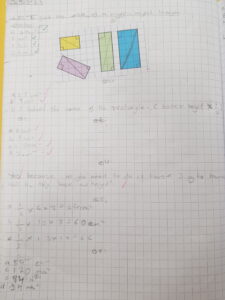
Transitioning from counting squares to formula application marked an exciting phase in their learning. We examined the relationship between right-angled triangles and rectangles, particularly noting how a right-angled triangle with the same base and perpendicular height as a rectangle possesses an area that is half of that rectangle’s area. Consequently, children adapted the rectangle area formula to a new one for right-angled triangles: area = 1/2 × base × perpendicular height.

We explored three-dimensional shapes, specifically looking at how to calculate volume. Children learned that they could find the volume of shapes like cuboids and other prisms by multiplying the volume of a single layer by the number of equal layers. They examined the relationship between total volume, as it relates to a cuboid’s length, width, and height.

Overall, it has been a rewarding process observing children expand their mathematical horizons and develop a solid foundation in geometry.
Computing – Networks

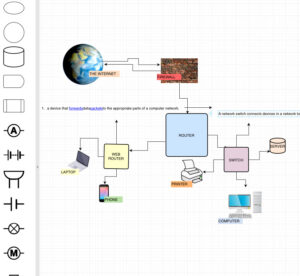
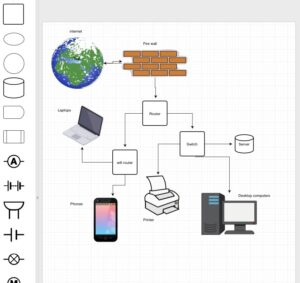
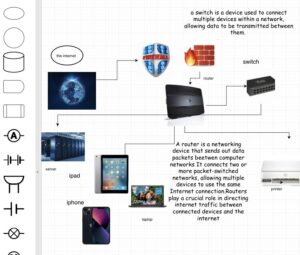
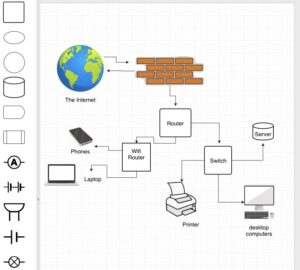
In our computing lessons, we have been focusing on understanding computer networks and how they work. We’ve been learning about the different types of networks, such as local area networks (LAN) and wide area networks (WAN), and how they connect computers and other devices to share information. We’ve also discussed the importance of routers, switches, and servers in making sure data travels smoothly across the network. To show our understanding, the children used the program 2Chart on Purple Mash to create diagrams and charts that represent how different devices are connected within a network.
Front Page News,Year 6 Blog

Yr 6 blog – Autumn 2

6th January 2025Roma Bloomfield

A great finish to a great year!

Year six have done amazingly this term. They have made heaps and heaps of progress already and we are so proud of them and the wonderful humans they are growing into. Staff are looking forward to starting our SATS booster groups in the new year. Please ensure your child knows the day, time and member of staff they are going to be taught by. We hope you have a wonderful Christmas with your friends and family and look forward to welcoming you all back in the New Year.

The Year Six Team

English
What an exciting term it has been for our budding authors! The children
have been truly busy bees, producing a delightful variety of texts, including
explanation texts, diary recounts, suspense stories, and some wonderfully
imaginative poetry. They’ve relished the opportunity to write for different
audiences and purposes, cultivating a real community of young writers.
We’ve taken a deep dive into the writing process, exploring an assortment
of texts, including some brilliant pieces from last year’s Year Sixes. It’s
remarkable to see how inspired and motivated the children have become,
crafting captivating and engaging narratives with an impressive range of
exciting vocabulary.

In our Author’s Chair sessions, they’ve enjoyed sharing their work and have
developed into experts at giving and receiving constructive feedback. Plus,
they’re building on their prior knowledge, exploring advanced punctuation
techniques that elevate their writing even further! To top it all off, we
celebrated with a pizza, publishing, and popcorn party! What a hoot! Here’s
to more exciting writing adventures ahead!

Reading
This term has been a thrilling journey through the world of reading
comprehension! We kicked things off with the inspiring tale of Mama Miti,
where the children explored the challenges faced by a Kenyan community
and the remarkable efforts of Wangari Maathai. This engaging narrative
sparked rich discussions about resilience and innovation.
Moving on, we dived into a fascinating non-fiction text about the Olympic
Games, which complemented our History topic on Ancient Greece
brilliantly. The students honed their skills in distinguishing between fiction
and non-fiction, learned how to summarise key parts of a text, and
identified various layout features such as sub-headings, captions, and
highlighted text.
We concluded our term with a whimsical foray into poetry, starting with the
delightful Jabberwocky. The children absolutely loved it, and we're excited to
continue our poetic exploration next term! What a fantastic reading
journey it has been!


MATHS

In maths this term we have been looking at fractions, how to convert different measures and ratio.

During our unit on fractions we have looked at equivalent fractions and how to simplfy fractions using common factors. They have learnt that when the numerator and
denominator have no common factors greater than 1, the
fraction is in its simplest form. Children have been  encouraged to look for the greatest possible number to divide by, but also understand that simplification
can be performed in more than one step. The children have been taught to compare fractions on a number line. They first work with pairs of fractions where one denominator
is a multiple of the other, building on learning from Year 5. They then look at pairs of fractions where the denominators are not multiples of each other, using their knowledge of
multiples and common multiples. They have learnt to add and subtract fractions – starting with fractions of the same denominator. We have then moved on to adding and subtracting using equivalent fractions and mixed number fractions.

We have worked hard to understand how to multiply fractions by integers which is the same as repeated addition of a fraction. As when adding and subtracting fractions, the denominator does not change. When multiplying mixed numbers, children can either partition them into wholes and parts, multiplying each of them by the integer, or convert the mixed
number to an improper fraction and then multiply the numerator by the integer. They have learnt to divide fractions where the numerator is a multiple of the integer they are
dividing by, for example 3/5 divided by 3, or 6/7 divided by 2.

We have learnt how to convert measures. The children can recognise, read and write all metric measures for length, mass and capacity. This is the first time they have been introduced to tonnes as a measure for mass. They can convert between units both ways, for example from metres to centimetres and centimetres to metres. When comparing measurements with different units, they know how to convert them to the

Science

In Year 6 science, students embark on an enlightening journey into the realms of light and classification, two fundamental topics that lay the groundwork for understanding the natural world.

Light is a crucial element of our daily experiences, and understanding how we perceive it is essential. Students learn about visible light, which constitutes only a small portion of the electromagnetic spectrum. This spectrum displays a range of wavelengths, each corresponding to different colours visible to the human eye. The study of light elucidates the intricate functioning of the human eye, including its various parts—such as the cornea, lens, retina, and optic nerve—that collaborate to process visual information. Furthermore, principles of reflection and refraction are explored, illustrating how light behaves when it encounters different surfaces or mediums. This understanding also extends to real-world implications, such as light pollution, which poses a significant threat to both human health and ecological balance, detracting from our night sky and impacting nocturnal wildlife.

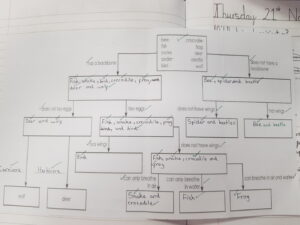
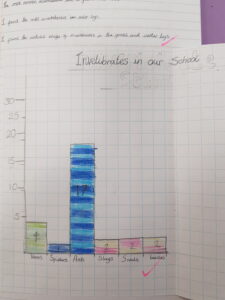
Equally important is the scientific principle of classification, which aids students in organising the natural world around them. Classification is the method of sorting and categorising living organisms based on shared characteristics, which provides clarity and facilitates communication within scientific disciplines. In the context of animals, students concentrate on two broad groups: vertebrates and invertebrates. Vertebrates are characterised by their backbone and are further divided into categories such as mammals, birds, reptiles, amphibians, and fish. In contrast, invertebrates lack a backbone and encompass a diverse range of organisms, including insects, arachnids, molluscs, and annelids.

By engaging with these concepts, Year 6 students cultivate a deeper appreciation for the complexity of life and the fundamental principles of physics, fostering both curiosity and critical thinking in the process.

Topic

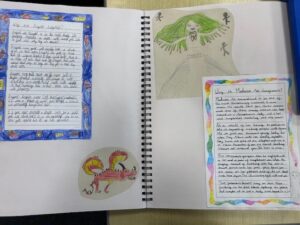
Our topic this half term has been all about The Ancient Greeks. We kick started this
unit with an exciting Ancient Greek day. We have been learning all about Ancient
Greek life, their governments, their influence and their impact on the modern day. In
line with this, we have been studying Greek art. We have investigated the three
different periods covered in this time: The Archaic period; The Classical period and the
Hellenistic period. We talked in detail about the differences between the eras, our likes
and dislikes and what influenced the changes during this time.

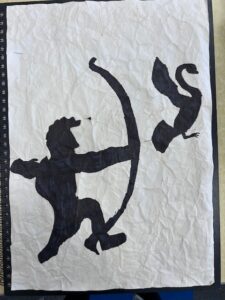
We did an art appreciation lesson about Phidias, the Greek sculptor, and evaluated his work. We have improved our drawing skills and focused on figurative drawing using sketches to plan and improve  our final drawings, working on using correct proportions by sectioning the body and adding detail to finish the drawings off.

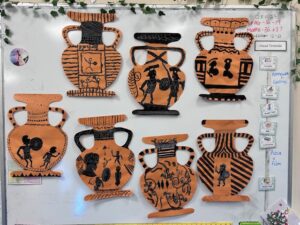
We have investigated Greek pottery and designed our own Greek pots inspired by our life story, the labours of Heracles or the Olympic games.

Year 6 Blog

Year 3

14th October 2021Roma Bloomfield

It has been an amazing first half term in Year 3. The children have wowed us with their enthusiasm for learning and we have been super impressed with how quickly they are adjusting to new routines in KS2.


Our highlights have been:

  • Making disgusting sandwiches as part of Poetry Day.
  • Having dragon teachers to inspire our writing in the forthcoming English unit.
  • Learning to code in computing lessons using Purple Mash.
  • Beginning to speak French with the help of karaoke.
  • Sketching trees outside in the nature reserve using our knowledge of tonal shading.
  • Creating shadows and designing sunglasses to help us learn the key words including transparent, translucent and opaque.


We can’t wait for our Reptile Day next week where we will be able to see and experience different scaly creatures! On the same day, we will be having our amazing Fun Run so if you haven’t already, please sponsor us!


Don’t forget to look at our Twitter account for pictures and updates @WigmorePrimary

Mr Pateman, Miss Bloomfield and Miss Islam. 🙂


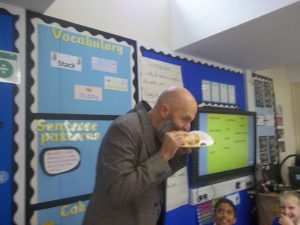
(Enjoy this picture of Mr Johnston enjoying our sandwiches)


Front Page News,Year 3 Blog
Contact
Twyford Drive, Luton,
Bedfordshire, LU2 9TB

01582 616101

[email protected]

SWGfL Report Harmful Content
School website powered by realsmart brand logo