Wigmore Primary School Logo

Wigmore Primary School

  • [email protected]
  • 01582 616101
  • About us
    • Headteacher’s Welcome
    • Staff list
    • Pupil premium
    • Aims, Vision and Values
    • Online Safety Updates
    • OFSTED
    • Performance
    • School Prospectus
    • Key policies
    • Safeguarding
    • Contact us
    • Vacancies
    • Governors
  • Parents Information
    • Curriculum letters
    • Friends of Wigmore
    • School Calendar
    • Inclusion
    • Term Dates and Events
    • Admissions
    • Letters
    • School Uniform
    • Phonics Resources for Parents
    • School Meals
      • Free School Meals
      • Milk & Fruit
      • School Meals Menus
  • Quality of Education
    • Year Group Overviews
    • English
      • Writing
      • Reading
    • Maths
    • Science
    • Phonics: RWI
    • EYFS
    • PE and Sports Premium
    • Computing
    • French
    • RE
    • PSHE
      • Jigsaw
      • Smart School Council
    • Design and Technology
    • History
    • Geography
    • Art
    • Music
  • School Blogs
    • EYFS Blog
    • Year 1 Blog
    • Year 2 Blog
    • Year 3 Blog
    • Year 4 Blog
    • Year 5 Blog
    • Year 6 Blog
    • Headteacher’s Blog
    • PE Blog
    • Digital leaders
Wigmore Primary School Logo
  • About us
    • Headteacher’s Welcome
    • Staff list
    • Pupil premium
    • Aims, Vision and Values
    • Online Safety Updates
    • OFSTED
    • Performance
    • School Prospectus
    • Key policies
    • Safeguarding
    • Contact us
    • Vacancies
    • Governors
  • Parents Information
    • Curriculum letters
    • Friends of Wigmore
    • School Calendar
    • Inclusion
    • Term Dates and Events
    • Admissions
    • Letters
    • School Uniform
    • Phonics Resources for Parents
    • School Meals
      • Free School Meals
      • Milk & Fruit
      • School Meals Menus
  • Quality of Education
    • Year Group Overviews
    • English
      • Writing
      • Reading
    • Maths
    • Science
    • Phonics: RWI
    • EYFS
    • PE and Sports Premium
    • Computing
    • French
    • RE
    • PSHE
      • Jigsaw
      • Smart School Council
    • Design and Technology
    • History
    • Geography
    • Art
    • Music
  • School Blogs
    • EYFS Blog
    • Year 1 Blog
    • Year 2 Blog
    • Year 3 Blog
    • Year 4 Blog
    • Year 5 Blog
    • Year 6 Blog
    • Headteacher’s Blog
    • PE Blog
    • Digital leaders
Wigmore Primary School Logo
  • About us
    • Headteacher’s Welcome
    • Staff list
    • Pupil premium
    • Aims, Vision and Values
    • Online Safety Updates
    • OFSTED
    • Performance
    • School Prospectus
    • Key policies
    • Safeguarding
    • Contact us
    • Vacancies
    • Governors
  • Parents Information
    • Curriculum letters
    • Friends of Wigmore
    • School Calendar
    • Inclusion
    • Term Dates and Events
    • Admissions
    • Letters
    • School Uniform
    • Phonics Resources for Parents
    • School Meals
      • Free School Meals
      • Milk & Fruit
      • School Meals Menus
  • Quality of Education
    • Year Group Overviews
    • English
      • Writing
      • Reading
    • Maths
    • Science
    • Phonics: RWI
    • EYFS
    • PE and Sports Premium
    • Computing
    • French
    • RE
    • PSHE
      • Jigsaw
      • Smart School Council
    • Design and Technology
    • History
    • Geography
    • Art
    • Music
  • School Blogs
    • EYFS Blog
    • Year 1 Blog
    • Year 2 Blog
    • Year 3 Blog
    • Year 4 Blog
    • Year 5 Blog
    • Year 6 Blog
    • Headteacher’s Blog
    • PE Blog
    • Digital leaders
  • [email protected]
  • 01582 616101
Category

Uncategorized

We are about to ‘spring’ into the summer term!

28th March 2025Jordan Clarke

Welcome to Year 4’s Spring 2 Blog!

“The beautiful thing about learning, is that nobody can take it away from you”

B.B. King

 

Welcome to year 4’s blog for Spring 2. We are excited to share with you all of the fantastic work we have produced. We’ve been super busy exploring our Amazon Rainforest topic, writing a variety of genres and practising our times tables a lot! Read on to hear more about our learning this half term…

Writing:

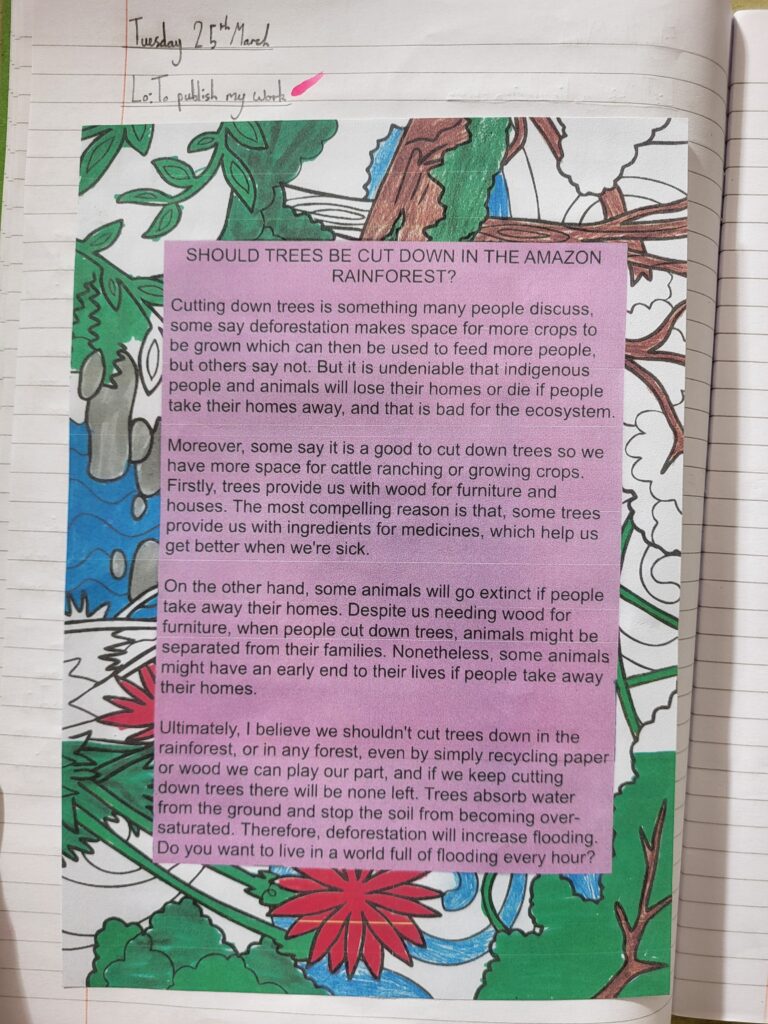
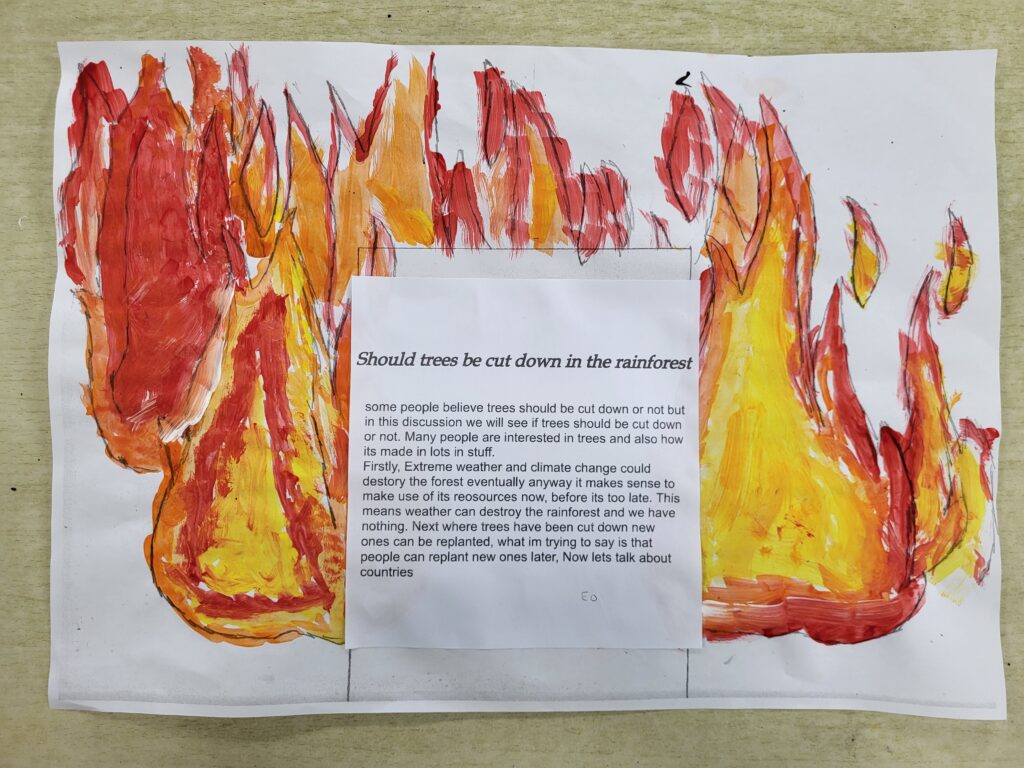
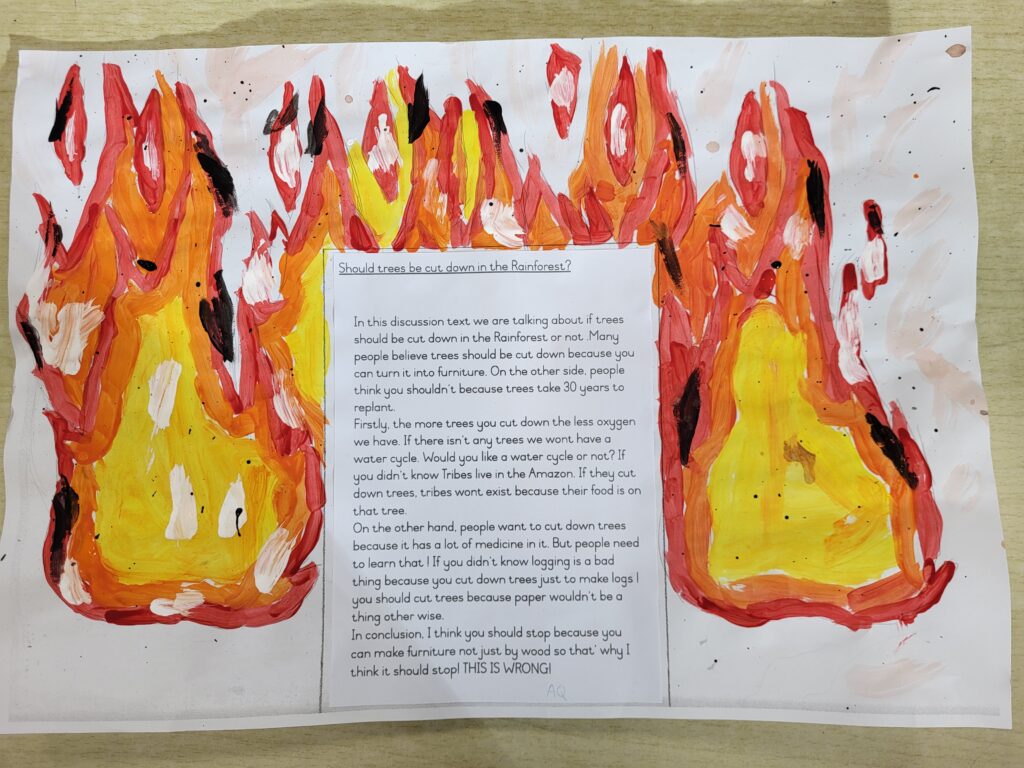
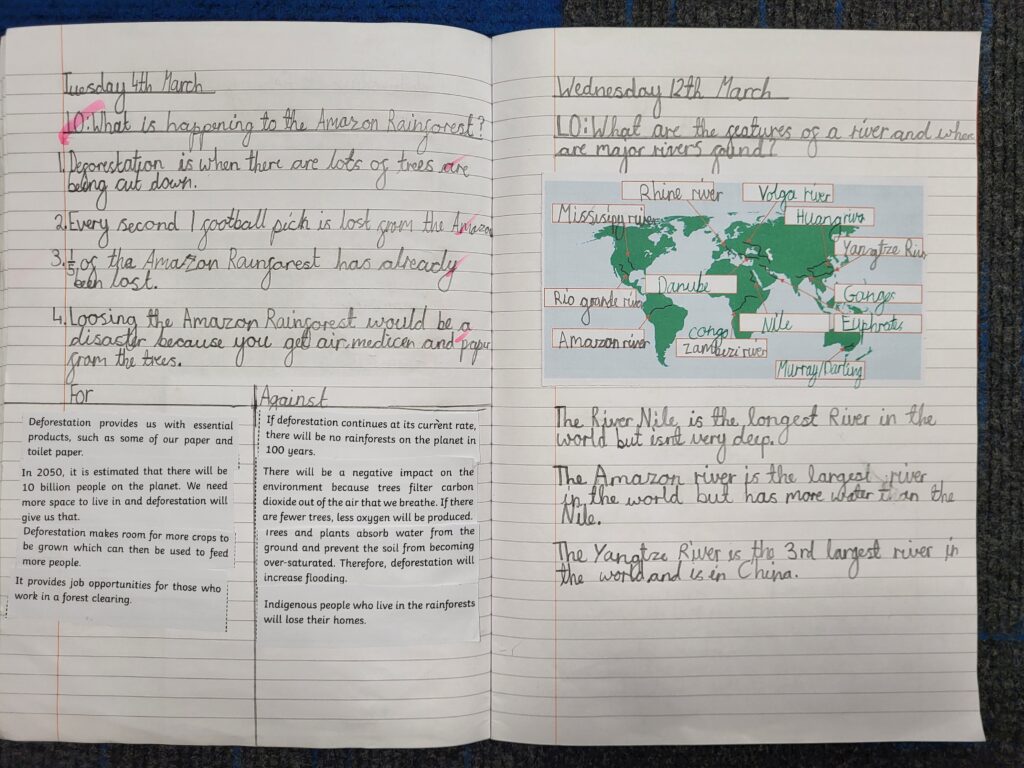
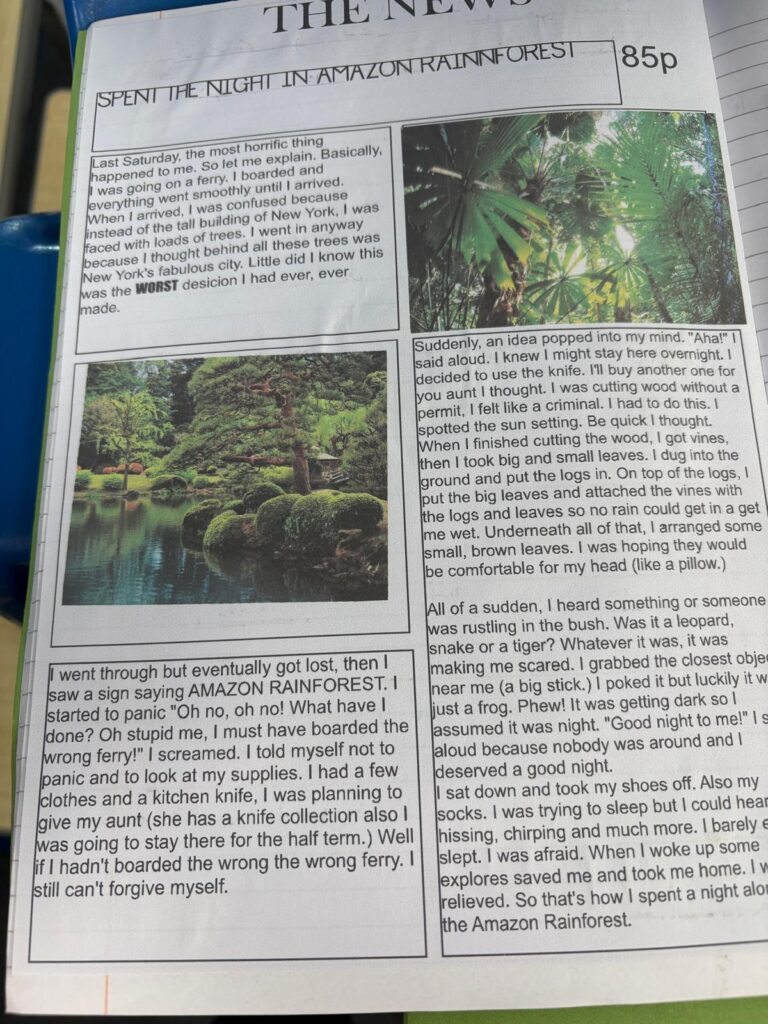
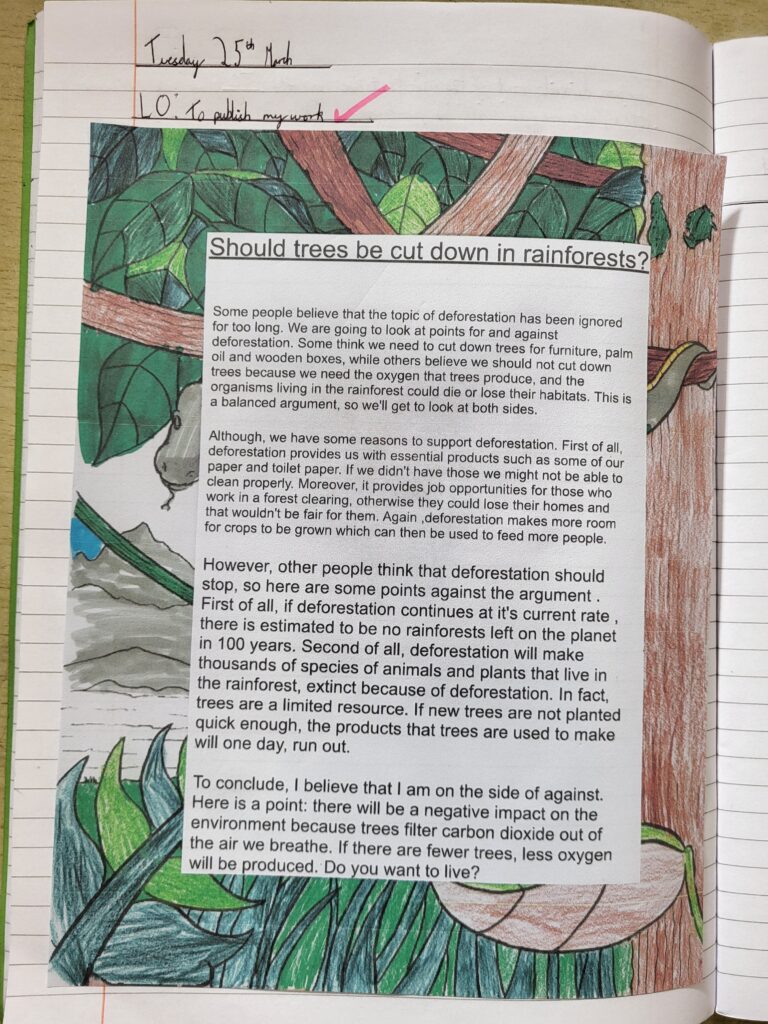
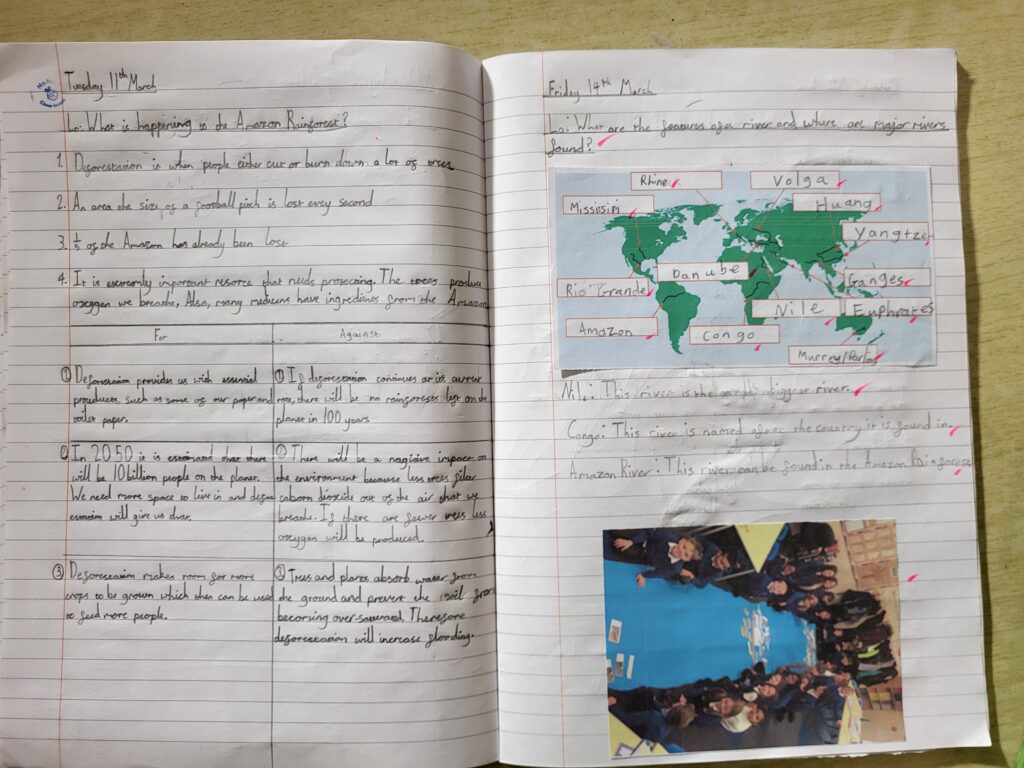
In our writing lessons we have linked this learning to our topic of ‘The Amazon’ We have been thinking about reasons for and against cutting down trees in the rainforest and the children have come up with some fantastic reasons. The final pieces of these discussion texts were fantastic – some classes are still busy producing some paintings to present them! Some classes have been handing out pen licenses for superb handwriting which is fantastic. Let’s see if we can get any more handed out in the summer term!


Maths:

Fractions key vocabulary:

Perhaps you could ask your child what these key terms are…

  • Numerator
  • Denominator
  • Equivalent
  • Mixed number
  • Improper fraction

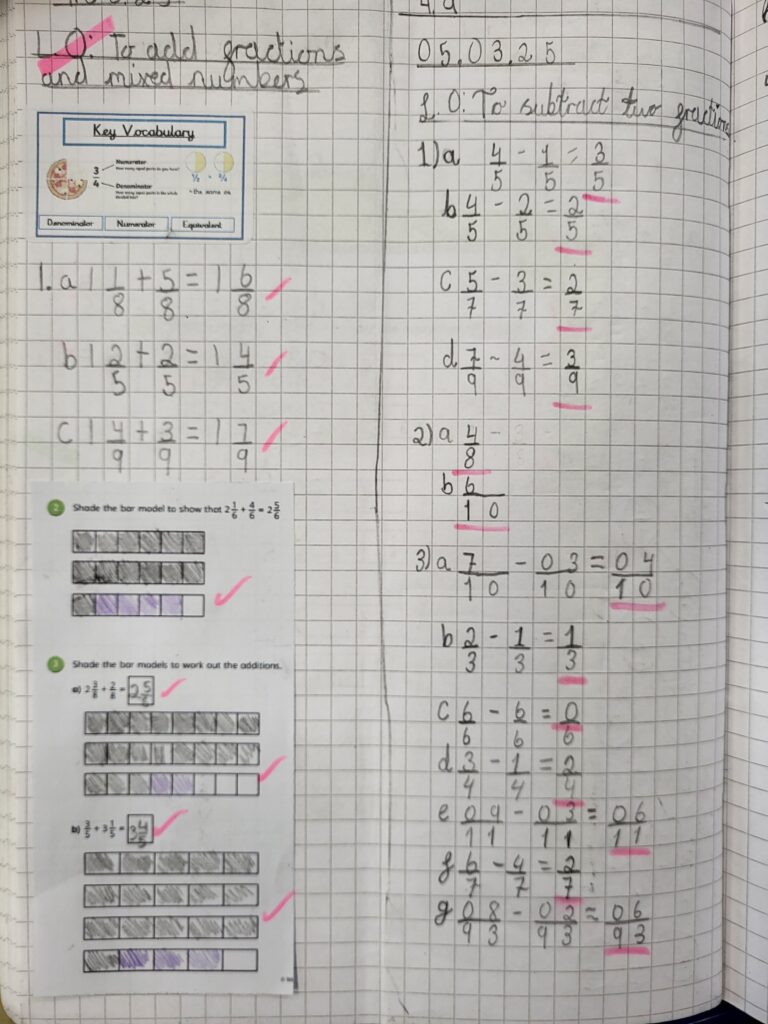
In our maths lessons we started by exploring fractions. We learnt about mixed numbers, improper fractions and how to convert one to the other. We looked at fractions on a number line and briefly explored equivalent fractions. Key vocabulary is a big focus, especially in our maths lessons, and we have been exploring the key terms in each lesson, making sure they understand words such as ‘equivalent’, ‘numerator’, ‘denominator’ and ‘improper’. Finally, we learnt how to add and subtract fractions, including mixed numbers. The children tried really hard with this and produced some beautiful work in their books to demonstrate their understanding.

Fractions key vocabulary:

Perhaps you could ask your child what these key terms are…

  • Decimal point
  • Tenth
  • Hundredth

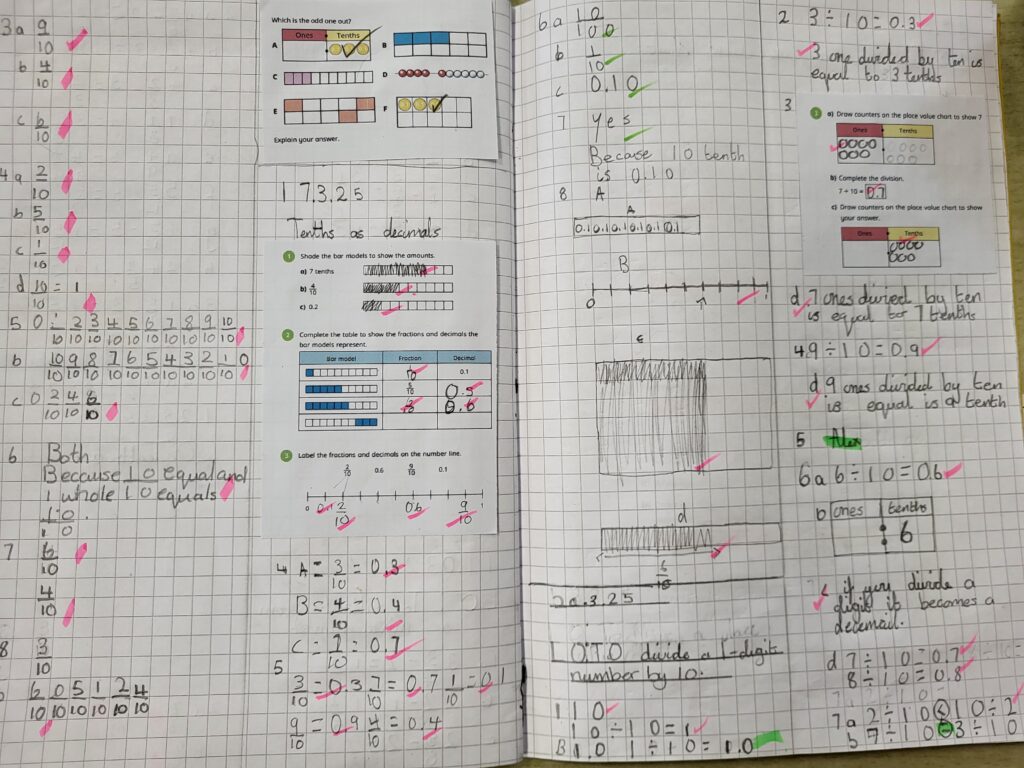
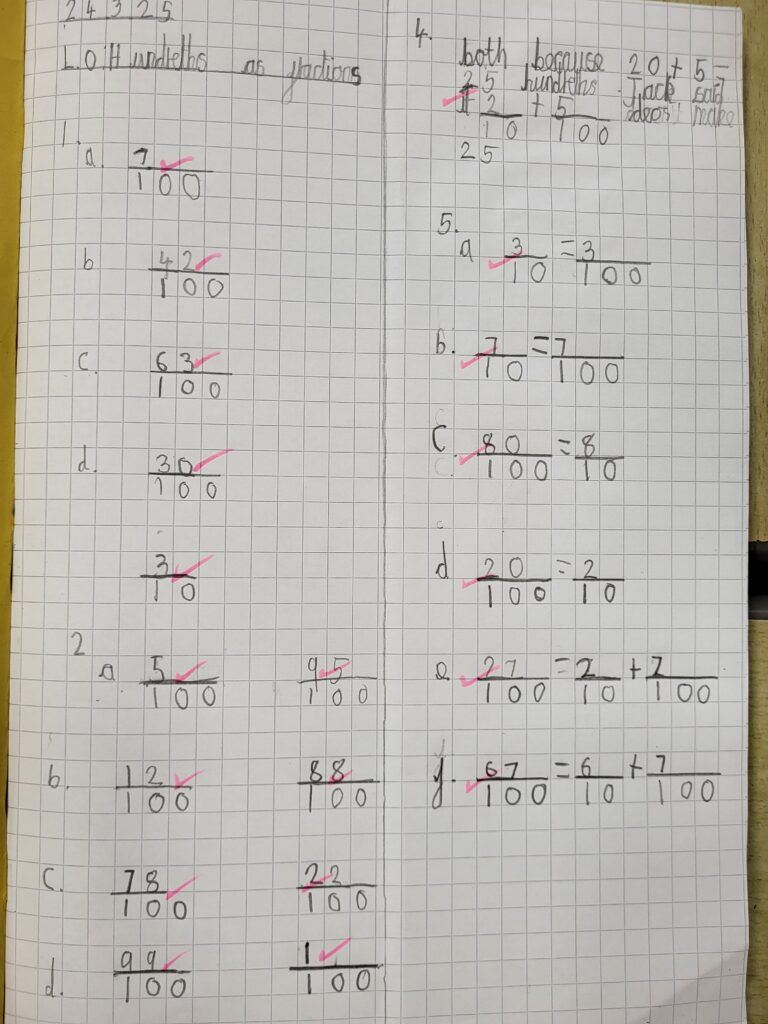
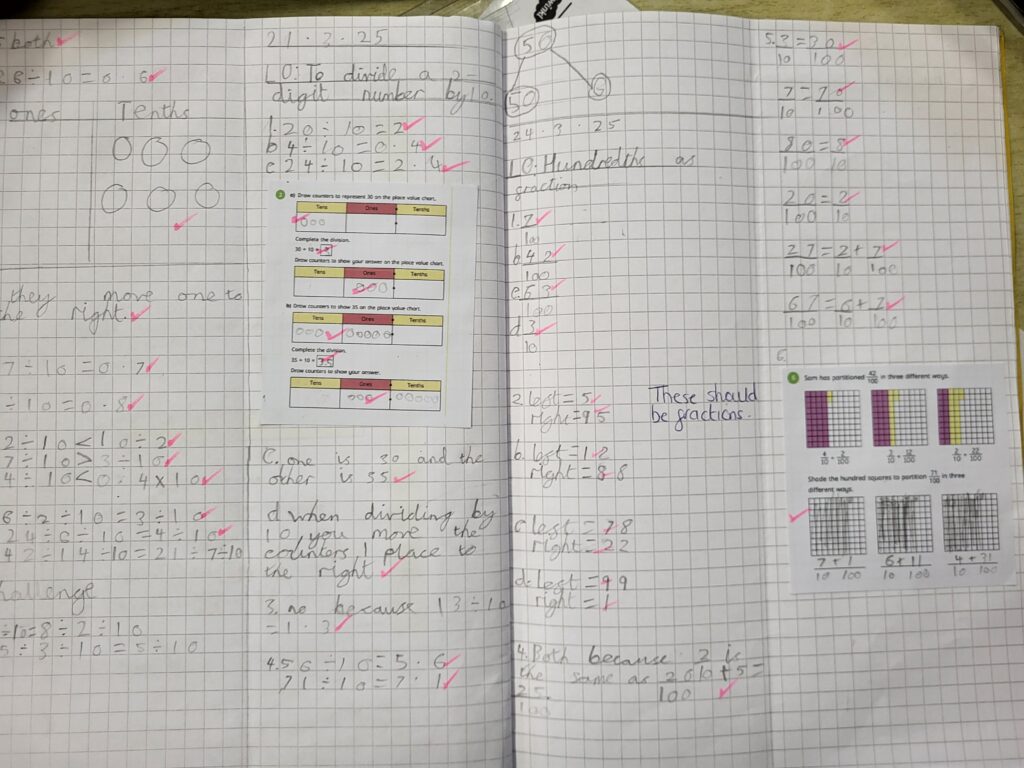
We then moved onto learning about decimals. We explored the link between fractions and decimals and used lots of visual representations to show which fractions and decimals are equivalent. At the beginning of this topic we explored tenths and how we can represent a tenth on a place value chart. We then moved on to dividing 1 and 2-digit numbers by 10, ending up with a decimal answer. The children have been exposed to new vocabulary and concepts, such as ‘decimal point’ and understanding how we represent decimals on a place value chart. The children have done a fantastic job so far, and we can really see the learning through the answers they have given, with sentence stems to support them.
Reading:
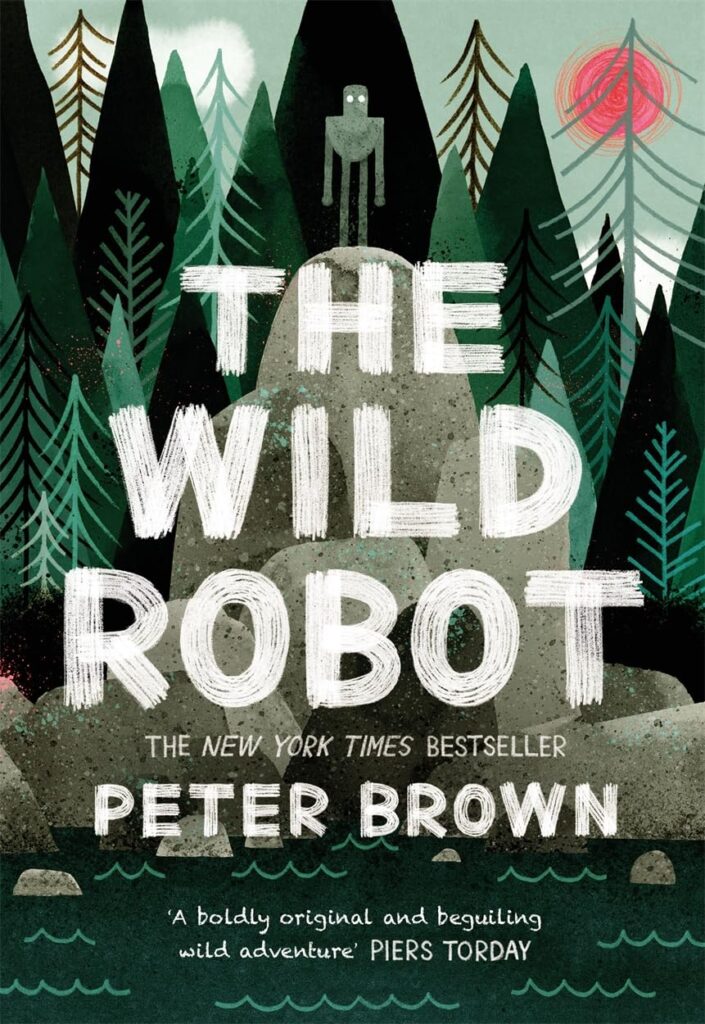
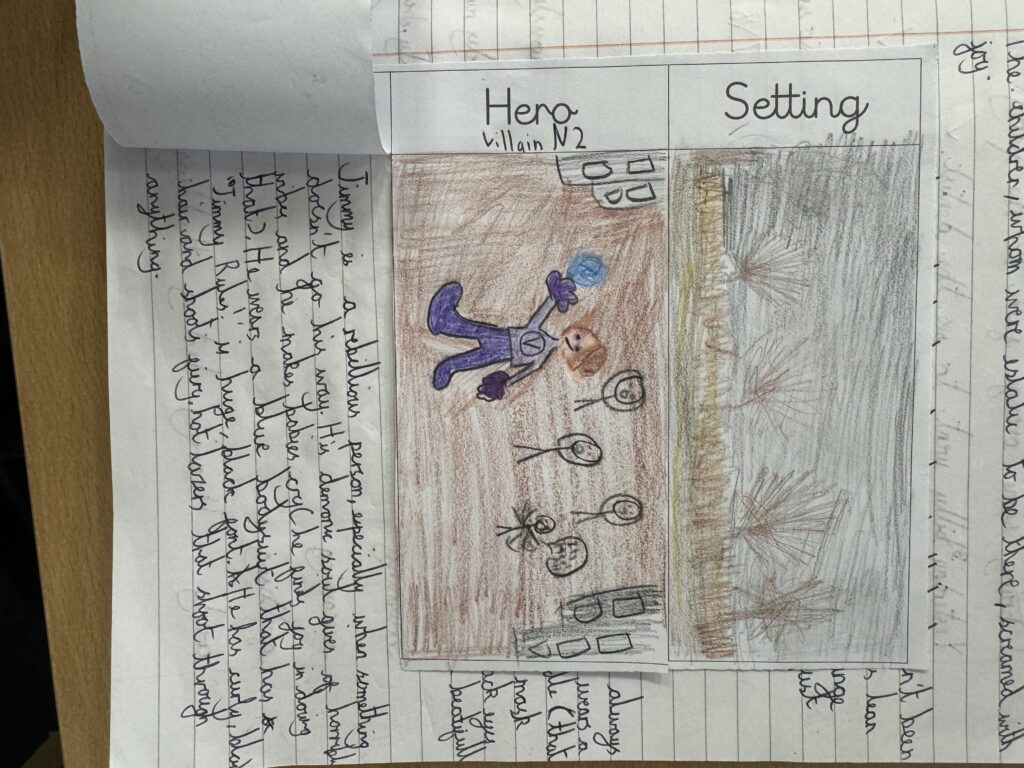
In our reading lessons we have been reading the fiction book ‘The Wild Robot’. The children have really enjoyed reading this book, and some have even seen the most recent film, which has aided their understanding. A variety of reading skills have been explored including summarising, predicting, comprehension, inference, retrieval and authorial intent. We have taken part in role play, thought about the similarities and differences between characters and how character’s emotions change over the course of a story. We have performed choral and echo reading sessions which have allowed us to hear the children reading with the correct tone, expression and intonation. This ensures that children understand the way in which texts have been written and how punctuation and structure have an influence on the way we read as a reader. There have been lots of opportunities for new vocabulary to be shared, and the children have been very curious to know what some of the words in the text mean when they are unsure. Recently, the children explored setting descriptions and predicted what they thought settings looked like, based on the words and phrases used in the text. As our year group are very artistic, this was an activity they really enjoyed.

We have just moved on to poetry, where we will be looking at a range of poem from a collection called ‘Being Me: Doing Nothing’ by Liz Brownlee. This two-week unit will focus on the features of poetry, the effect that different poetic devices has on the reader and eventually having a go at writing our own short poem. We are looking forward to seeing what the children produce in the last week of the spring term.

Geography:

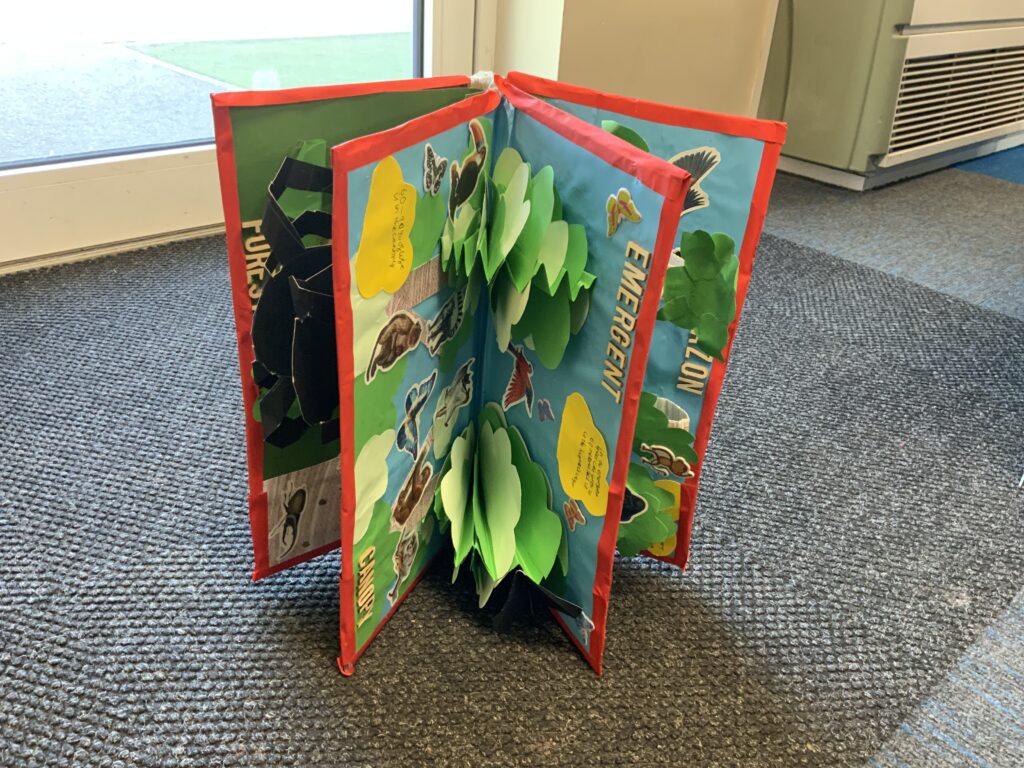
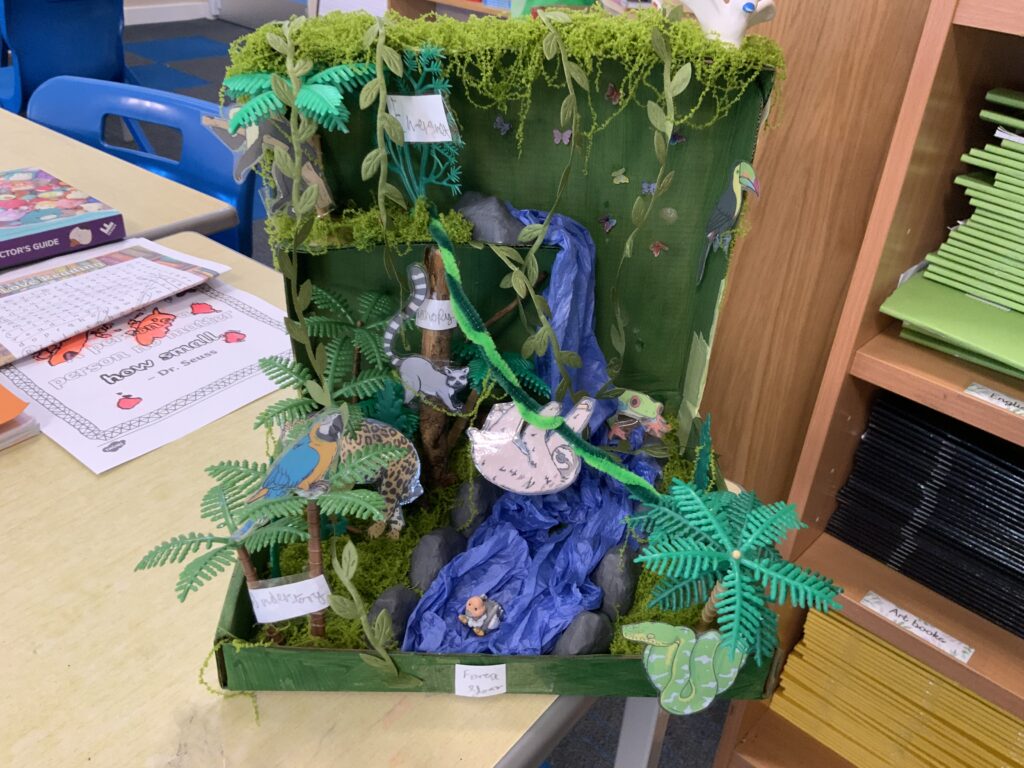
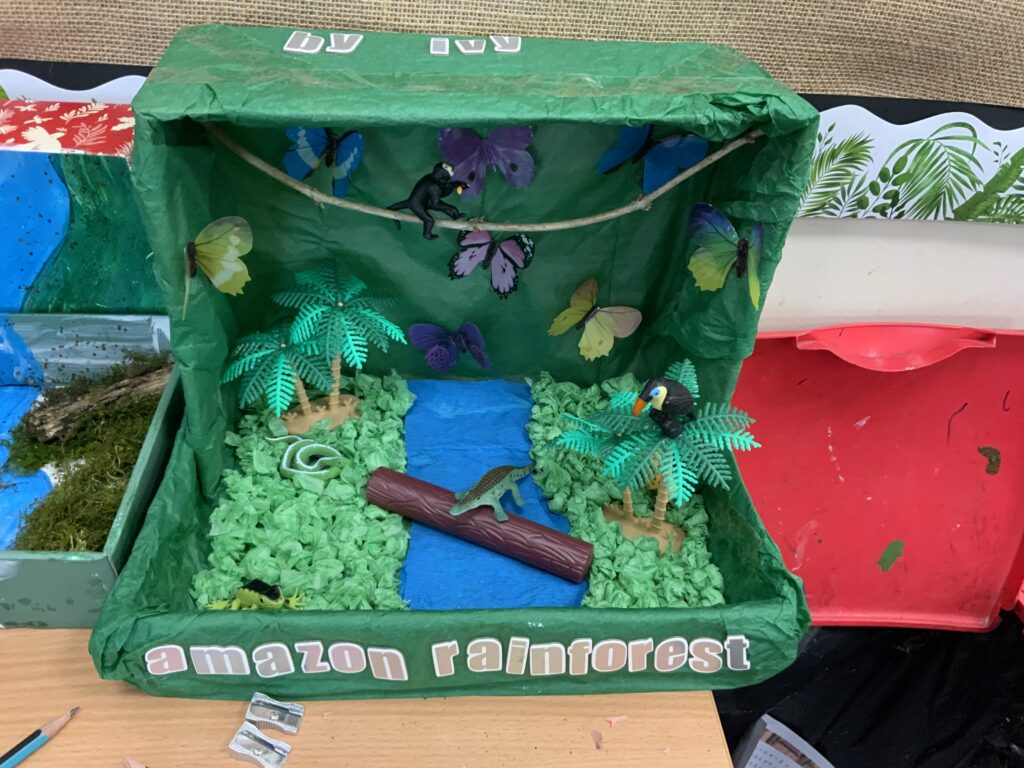
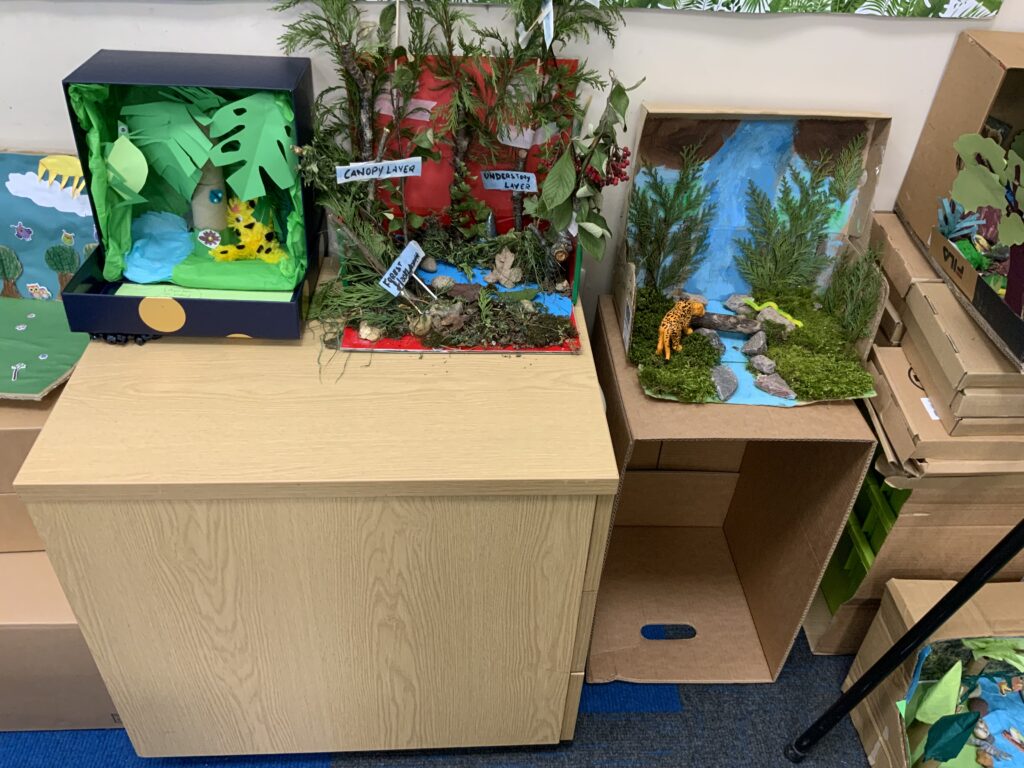
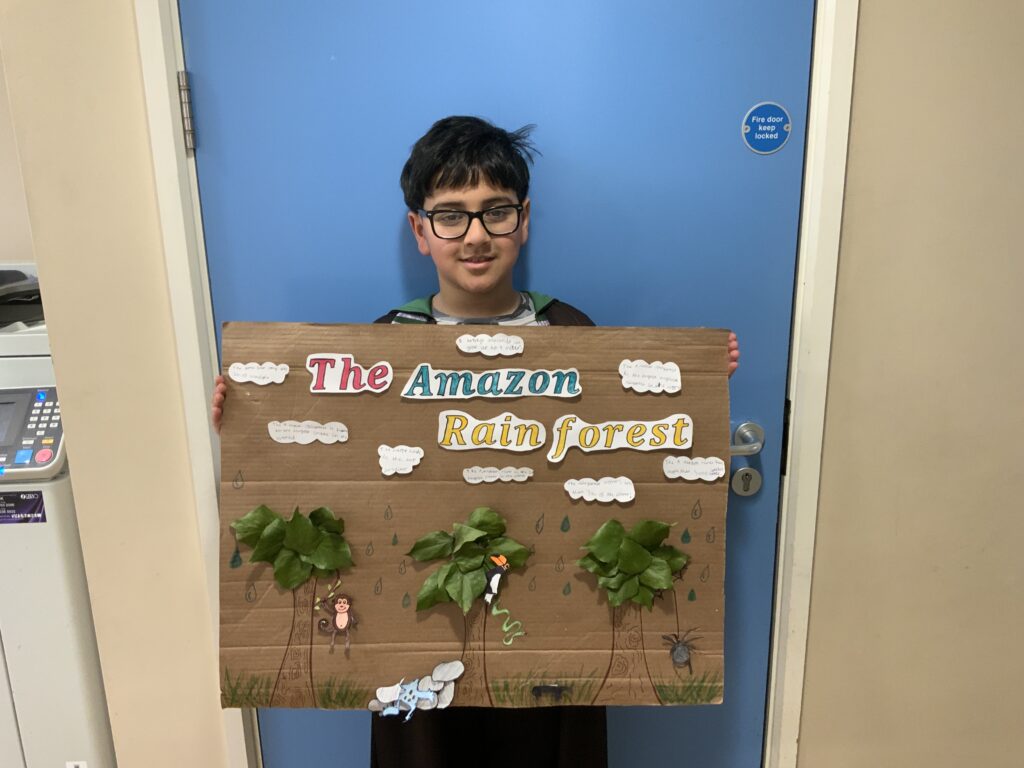
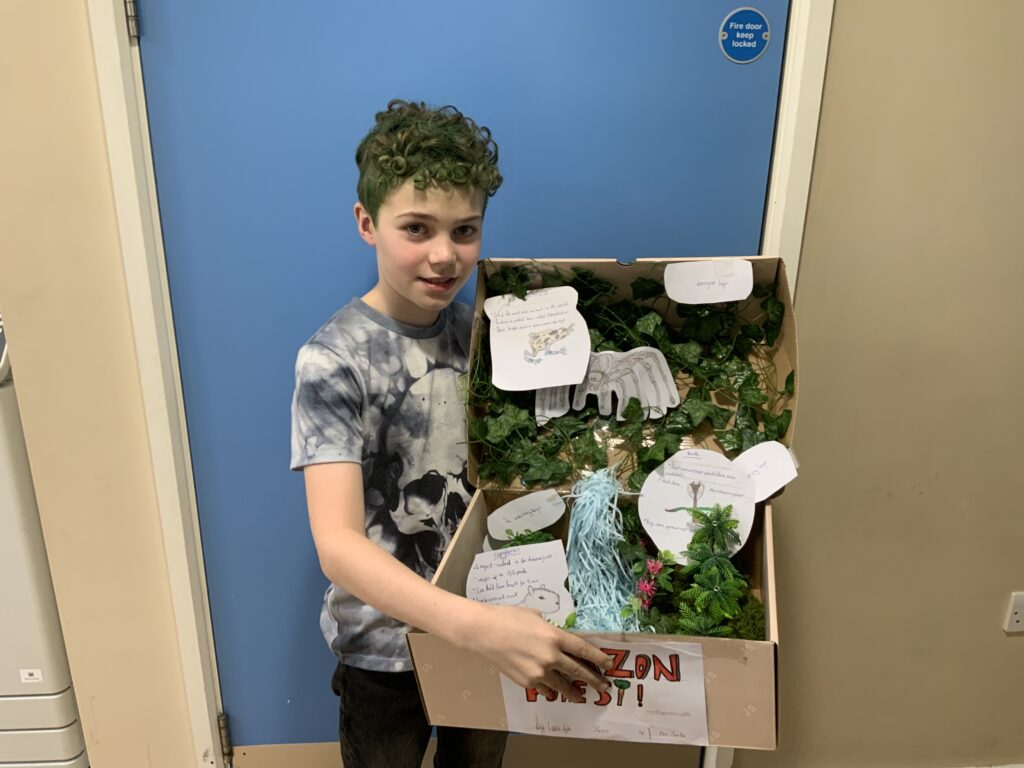
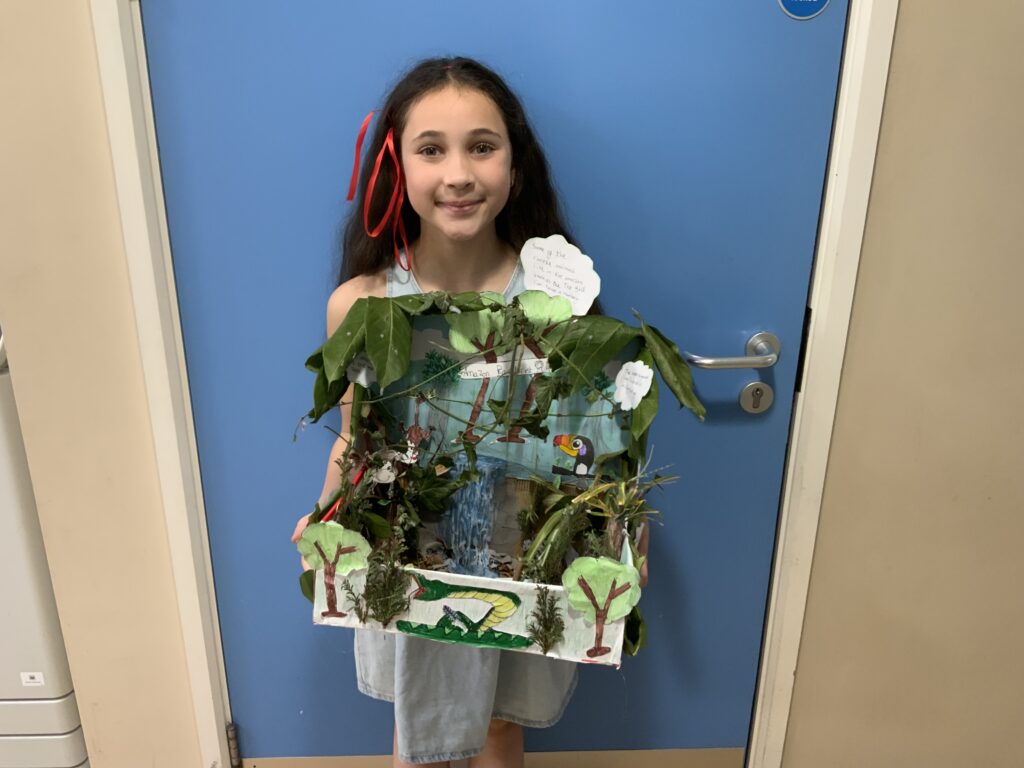
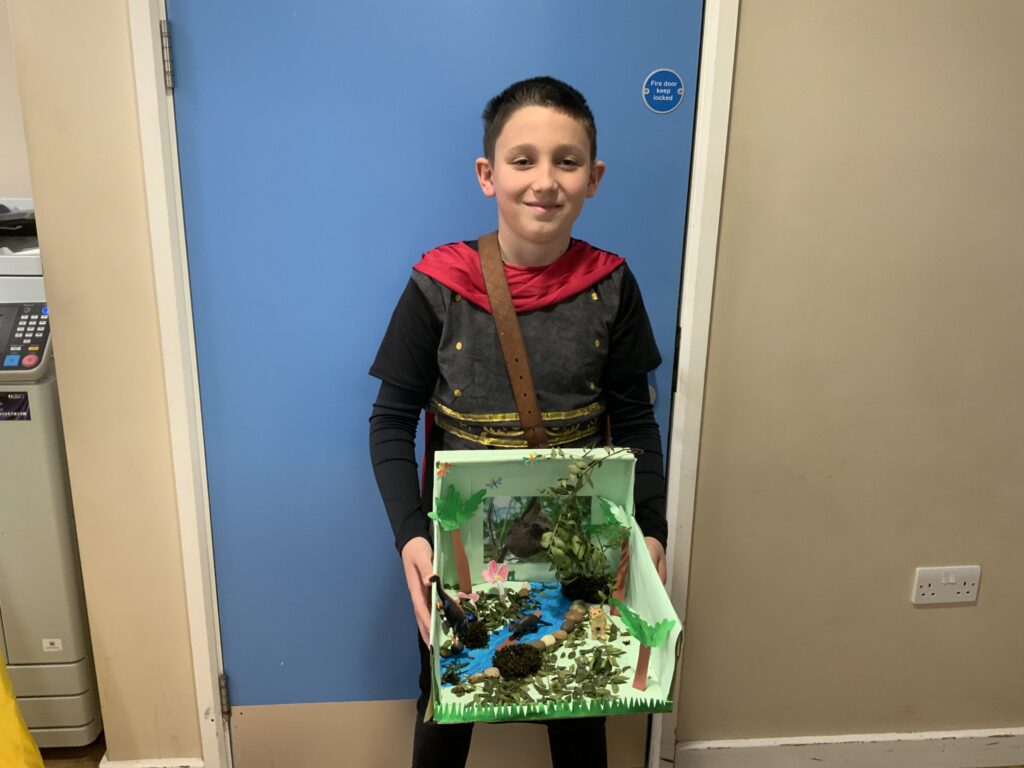
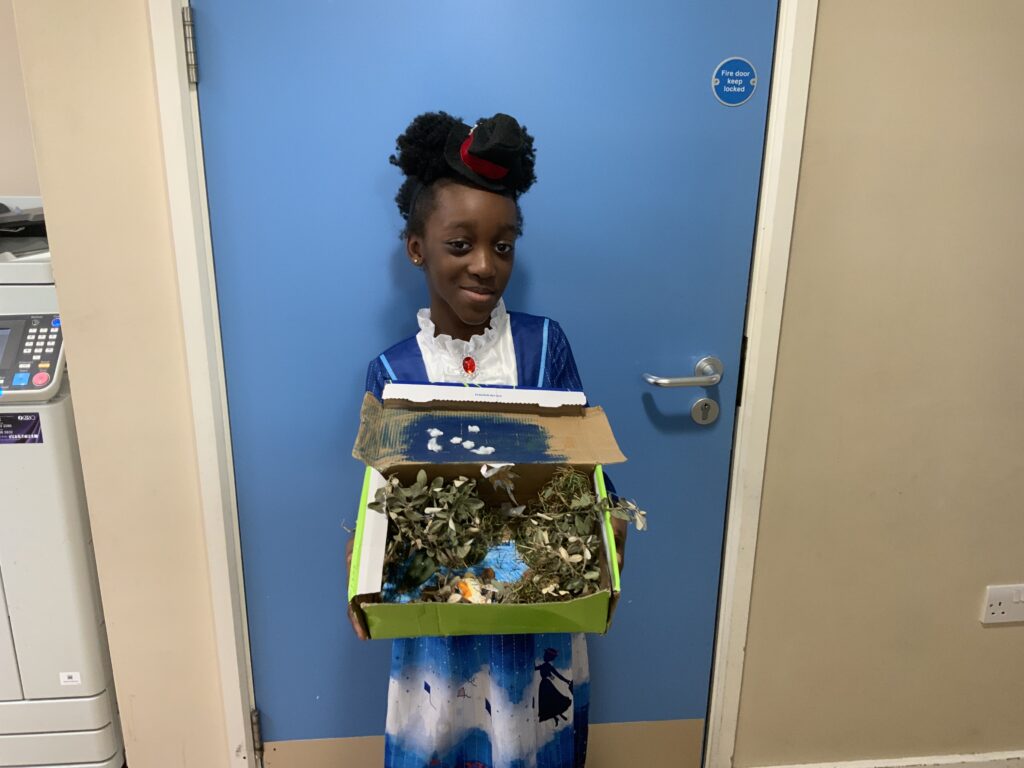
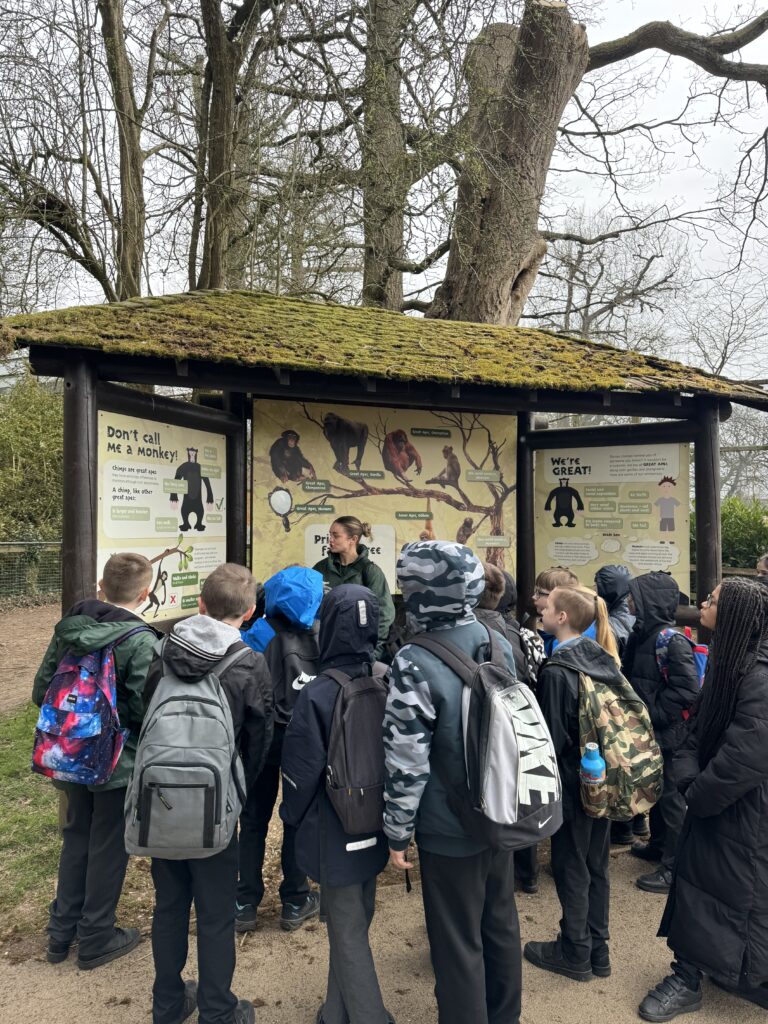
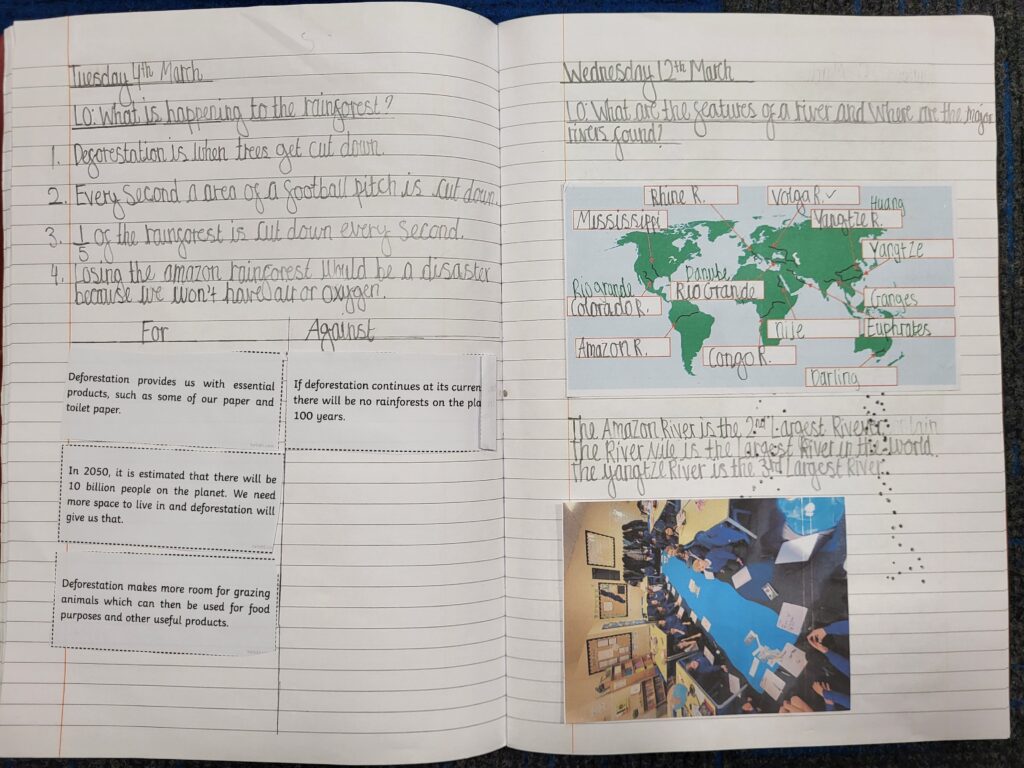
We have had a fantastic time continuing with our Amazon Rainforest topic. We were lucky enough to visit Whipsnade Zoo and take part in an educational talk as part of our learning, which also linked in with our science topic of ‘living things and their environments’. We are actually really sad to be coming to the end of the unit as we have really enjoyed it – and what fantastic pieces of work have been produced! Year 4 teachers were blown away by the effort that lots of children made in creating their own Amazon Rainforest. We received work made out of shoe boxes, paintings, posters, interactive books, powerpoint presentations and pop up books. The time and effort the children spent in creating these is credible and a big thank you to parents for assisting with this and supporting the children.

We have continued to learn about the inside of the Amazon rainforest, Amazonian tribes, Amazonian animals before moving onto rivers and how they are used. Did you know that the Amazon River is the largest river in terms of volume? Ask your child if they know the largest river in the world by length! We have learnt about the features of a river, where rivers start and how they play a very important part of the water cycle. Have a look below at some of the fantastic rainforests and some of the insides of the children’s books!
School Value – Curiosity:

To support the children in understanding how we can show our school values, in particular curiosity for this half term, we have explored lots of ‘Amazing People’ and what they have done which encompasses our current half term value. We’ve learnt about Alan Turing, Howard Florey, Isaac Newton, Percy Julian and Beulah Henry. We watched clips and listened to their story to find out what they did that changed the world and how curiosity was shown. At the end of the half term, we will be reflecting on these people and thinking about ways that we can show curiosity in the future.

Outdoor learning:

As we are coming into the warmer months, we are going to be doing some gardening. We have a variety of seeds that we will be planting in the allotments area of the school and taking on jobs in classes to maintain the garden area and ensure that we allow the correct conditions for the seeds to grow. We will then group the children to be put in charge of watering, de weeding, tidying, clearing rubbish or litter that has entered the area and preparing soil using our gardening equipment. We look forward to this and will share the updates in our next blog!

Science:

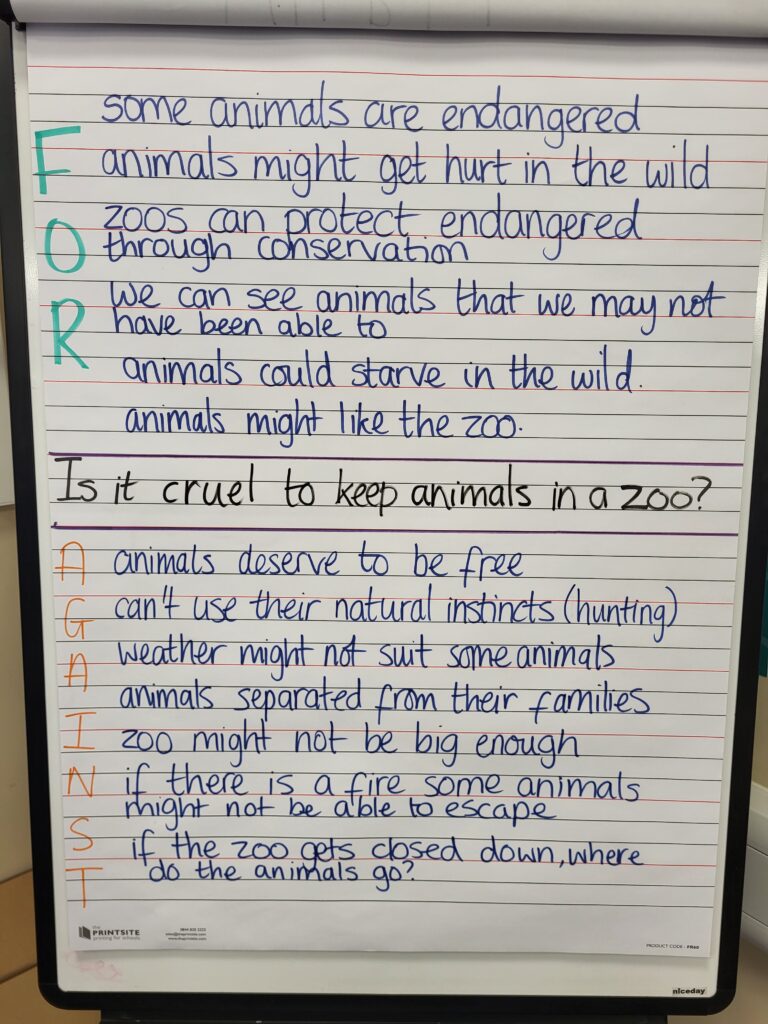
Our science topic this half term has continued with ‘living things and their environments’. Just before the half term we had our fantastic Whipsnade Zoo trip. The children really enjoyed themselves and engaged in a very interesting educational talk, where they got to look at different animals’ skeleton and work out, from their features, what type of animal they were. We were quite surprised by some of them, but we all managed to identify the hippo! In class, we have been learning about food chains and webs and how some animals share the same characteristics, but each one can be classified differently. We even had a go at classifying living things and coming up with our own questions. At the very end of the topic, we are going to be doing a piece of cross curricular writing. This involves the children choosing from 1 of 5 different topics, and using their knowledge of writing a discussion text from English, to explain reasons for and against either:

  • Should we save water?
  • Should we use less energy for lighting at school?
  • Should we have more bins on the playground?
  • Should we put up bird boxes on the school grounds?
  • Should we be able to play in the nature reserve

We are confident the children will produce some excellent pieces of work and we can’t wait hear what they choose to write about!
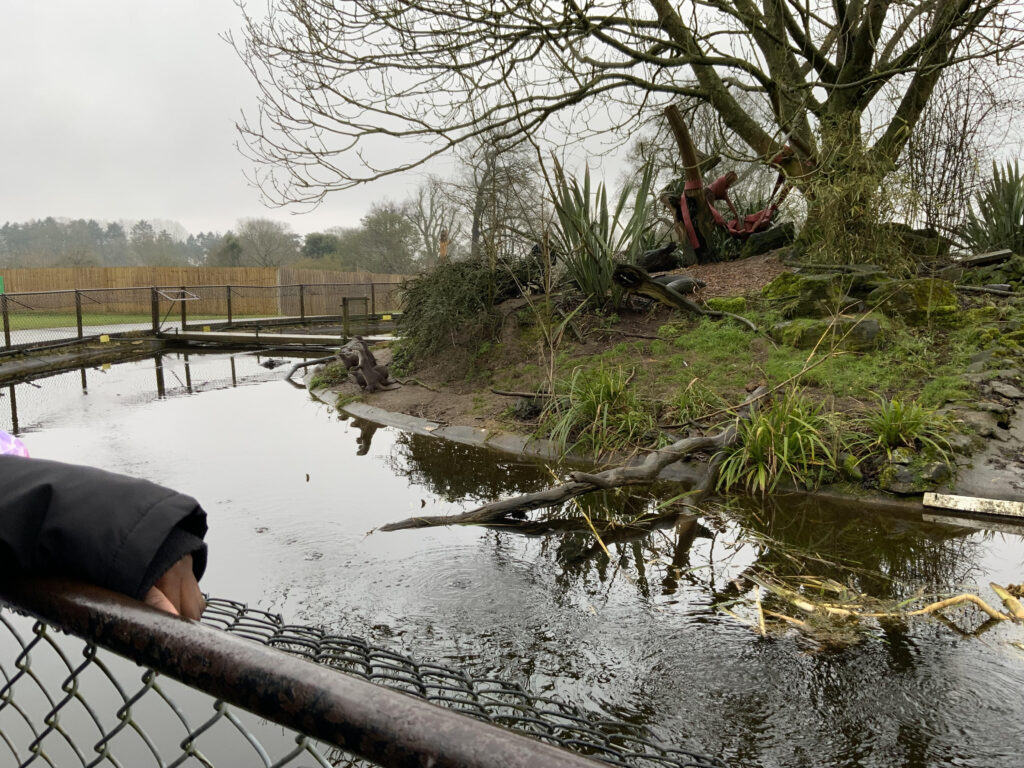
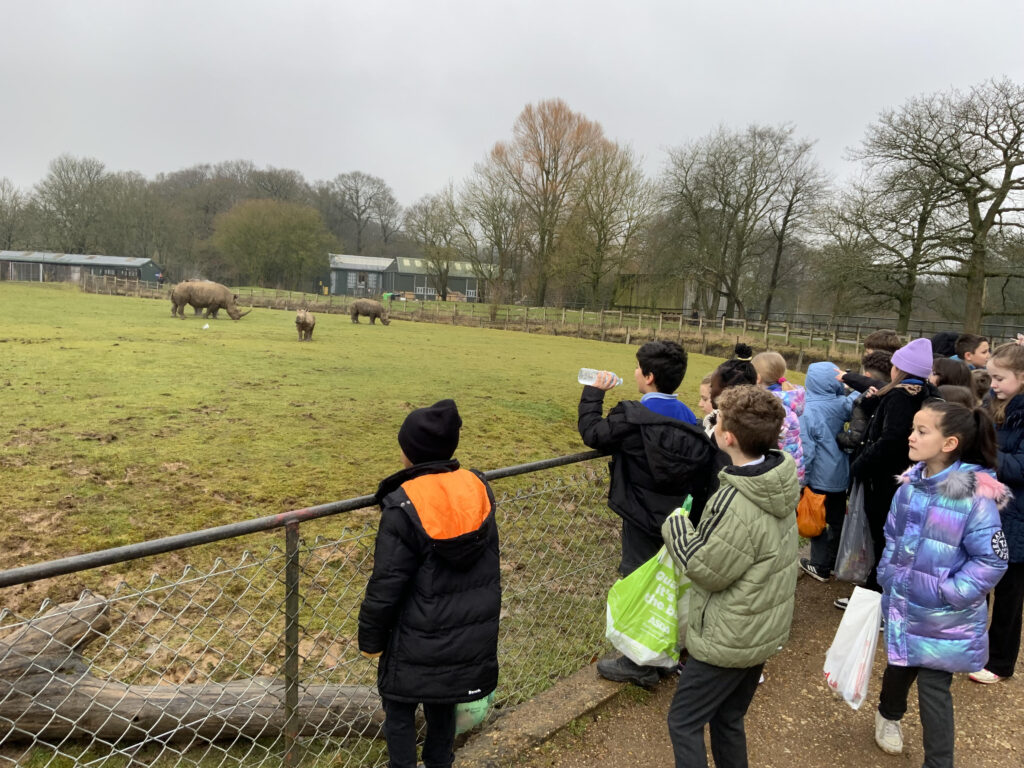
Thank you for taking the time to read what the children have been up to. We hope you all have a restful break when it arrives, and we look forward to welcoming the children back after the holidays! Can you believe we are going to be going into the summer term!?
Uncategorized,Year 4 Blog

Year 5 Spring Blog!

27th March 2025Gopi Shah

English 

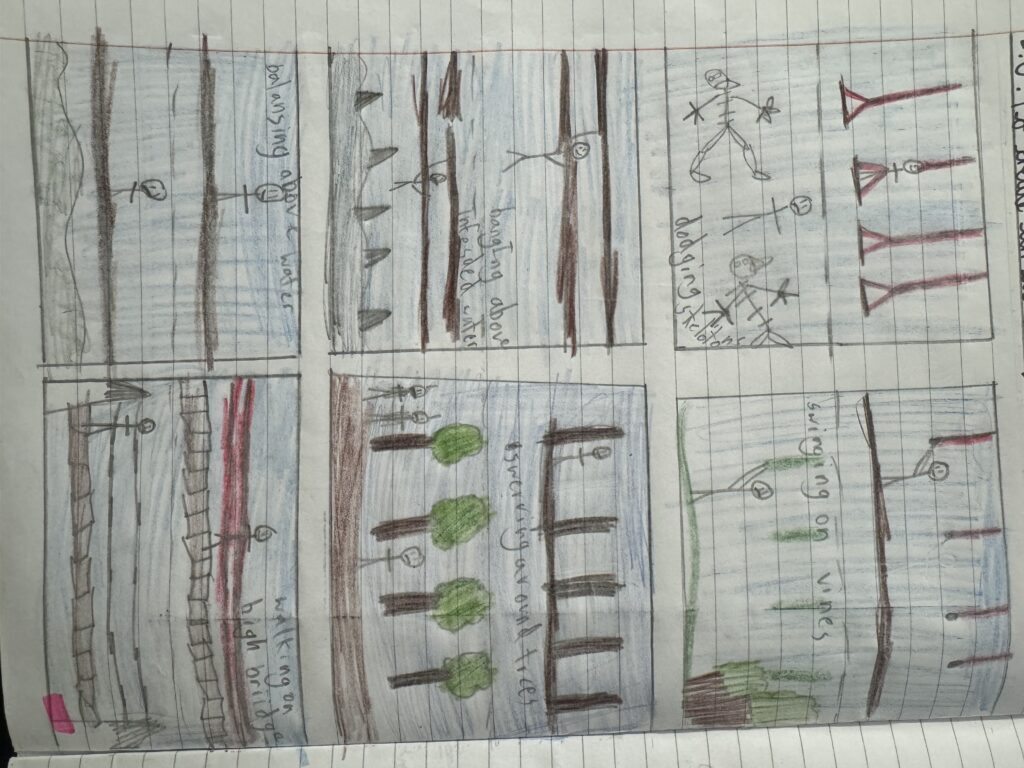
In English we went out and completed an obstacle course to support our understanding of an action scene. We also created comics and artwork to support our writing. We are currently focusing on creating our action story by building characters and developing our vocabulary to enhance our narratives.

Maths

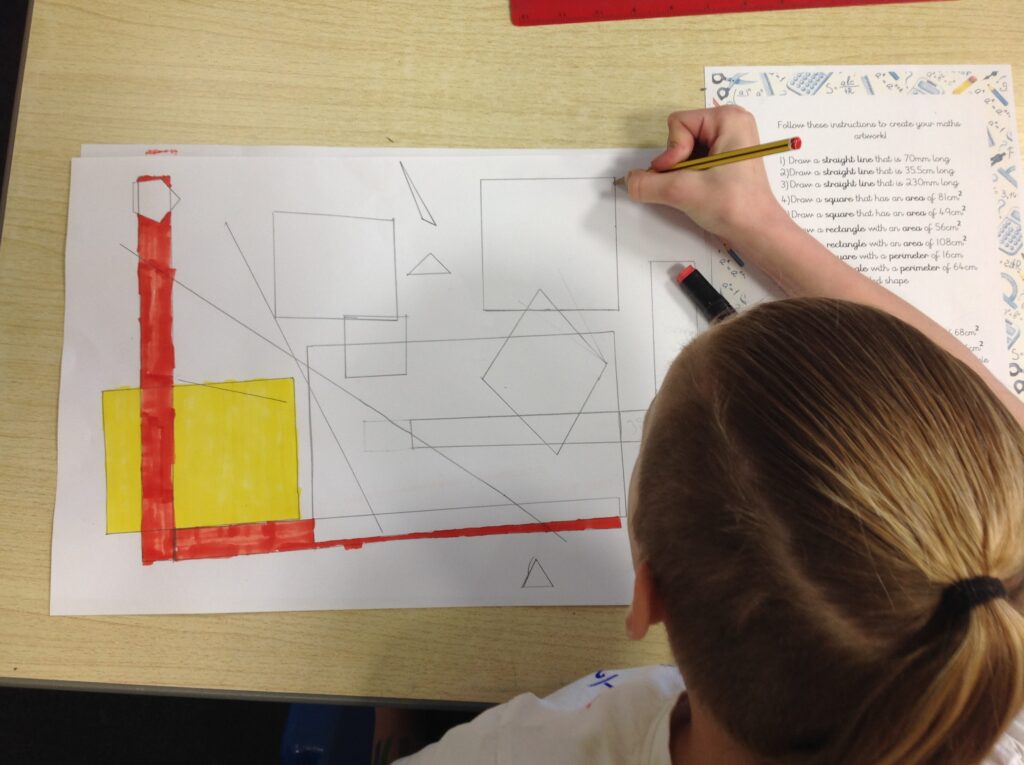
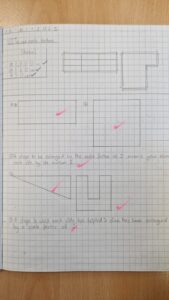
In maths we have been learning about area and perimeter. The children then used this information to create a piece of abstract artwork using different line lengths, perimeters and areas of shapes. We have also learnt about compound shapes and how to find their area and perimeter.

Reading

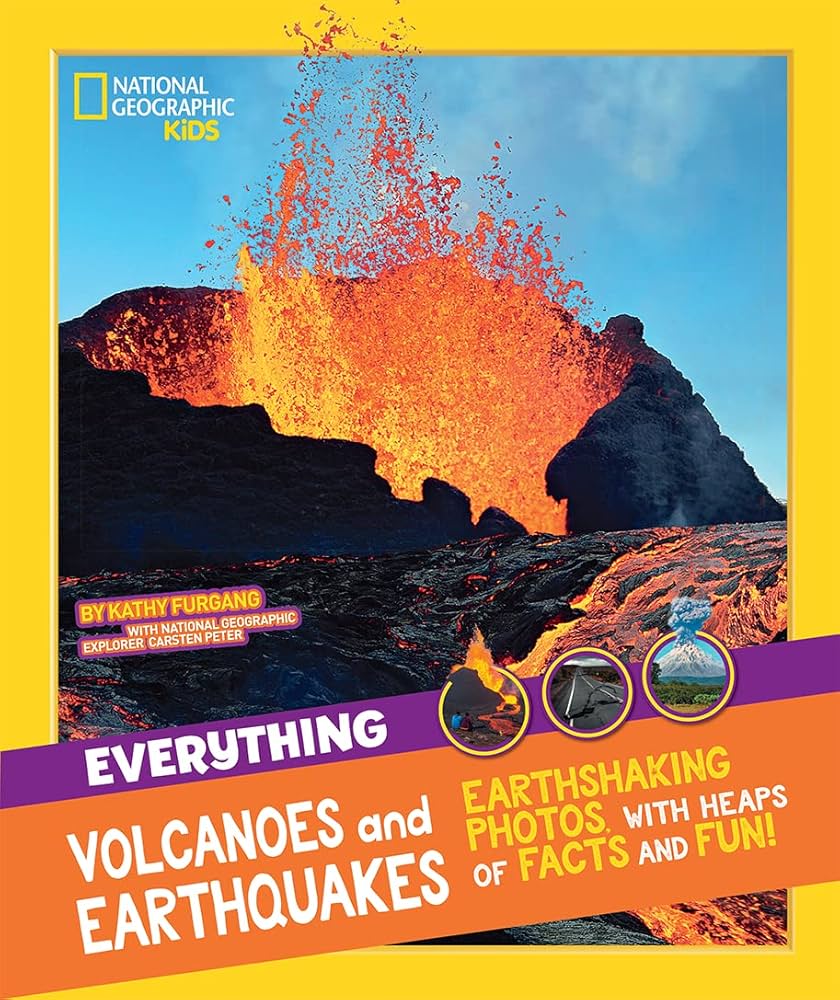
We finished cosmic and the children created blurbs summarising all the information they had learnt to encourage others to read the book. We are now reading the book Everything Earthquakes and Volcanoes which is a non-fiction book which supports our geography topic all about Asia and natural disasters. The children have enjoyed learning about underwater volcanoes, creating vocabulary grids and organising data about earthquakes and their magnitude.

Art and Topic

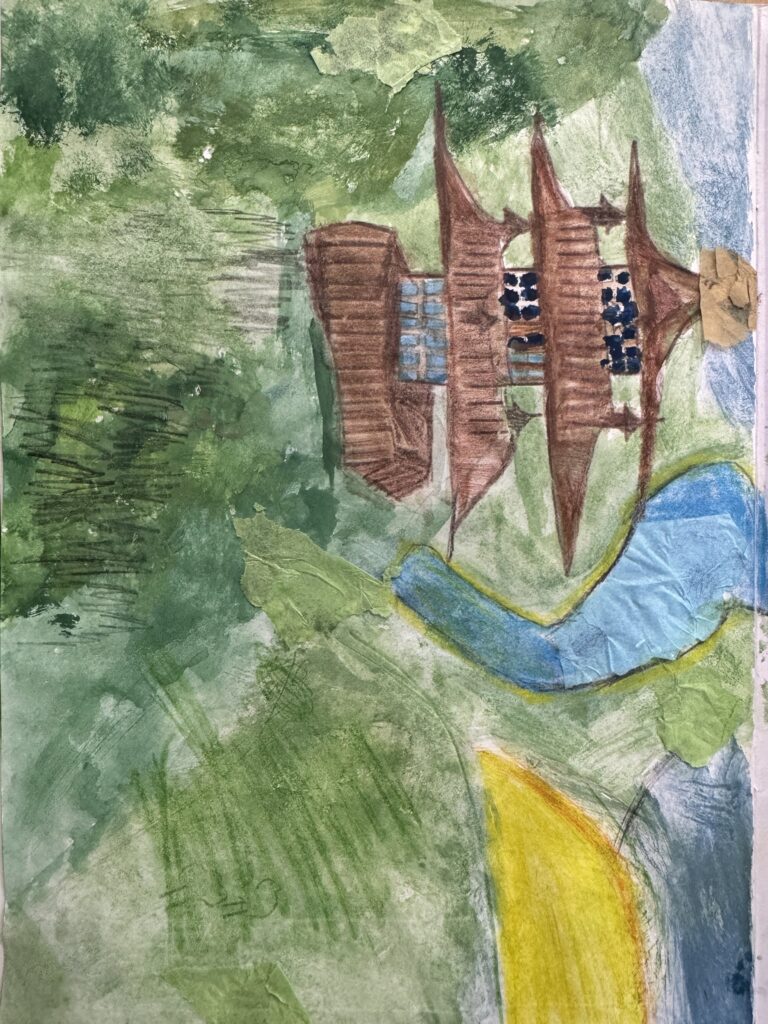
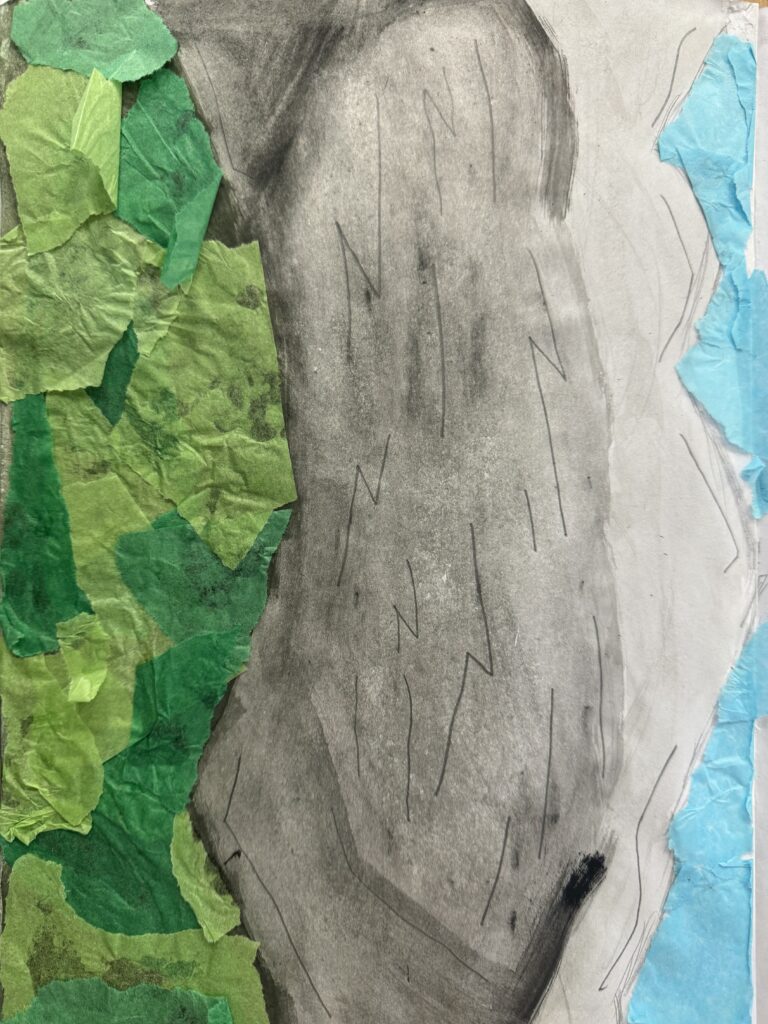
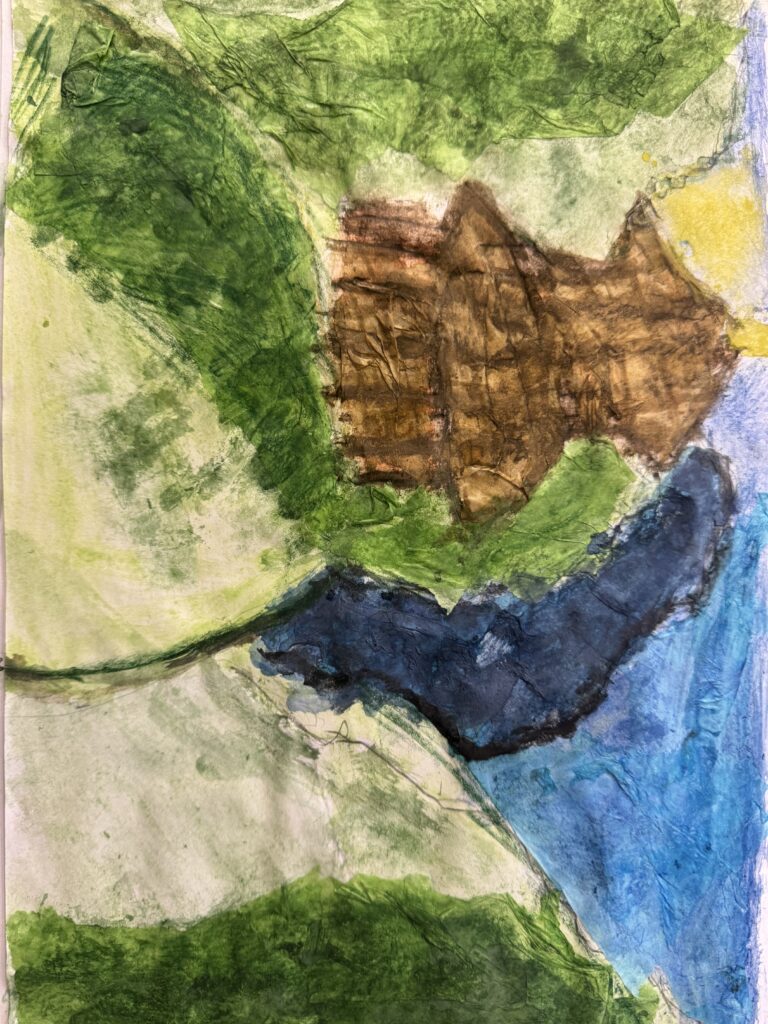
In art, we linked our final pieces to our geography topic of Asia and used watercolours, collage and pastels to create landscapes inspired by images of the Asian countryside. The children enjoyed manipulating different mediums to create their artwork and exploring different techniques to add texture to their work.

Zoo

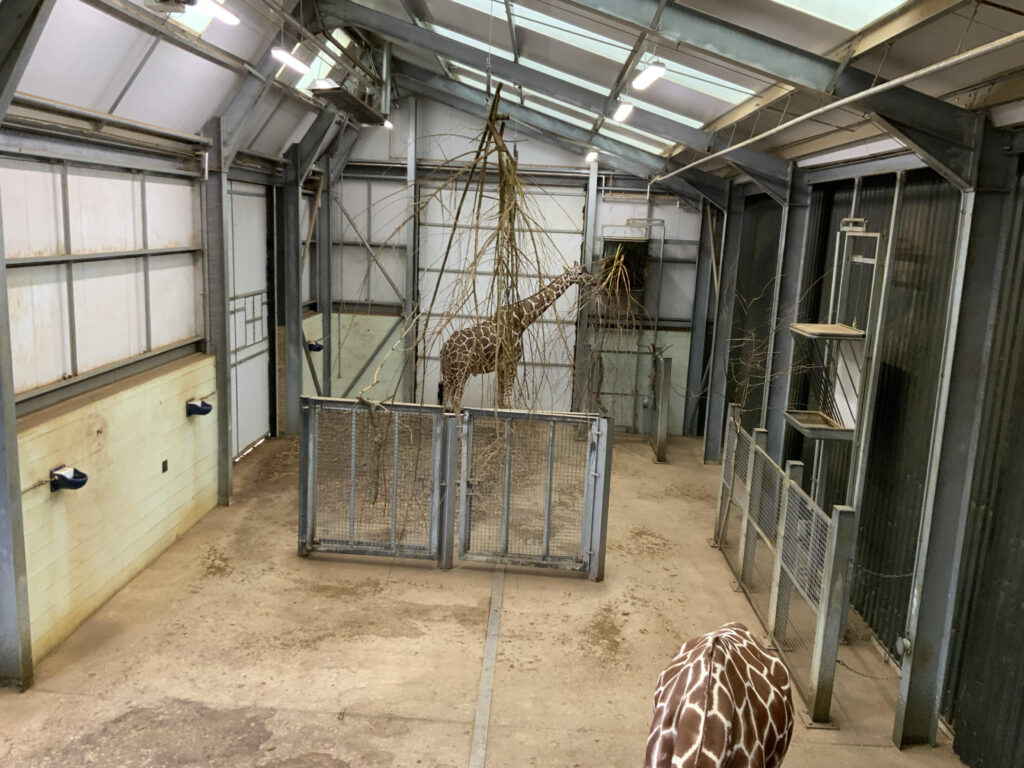
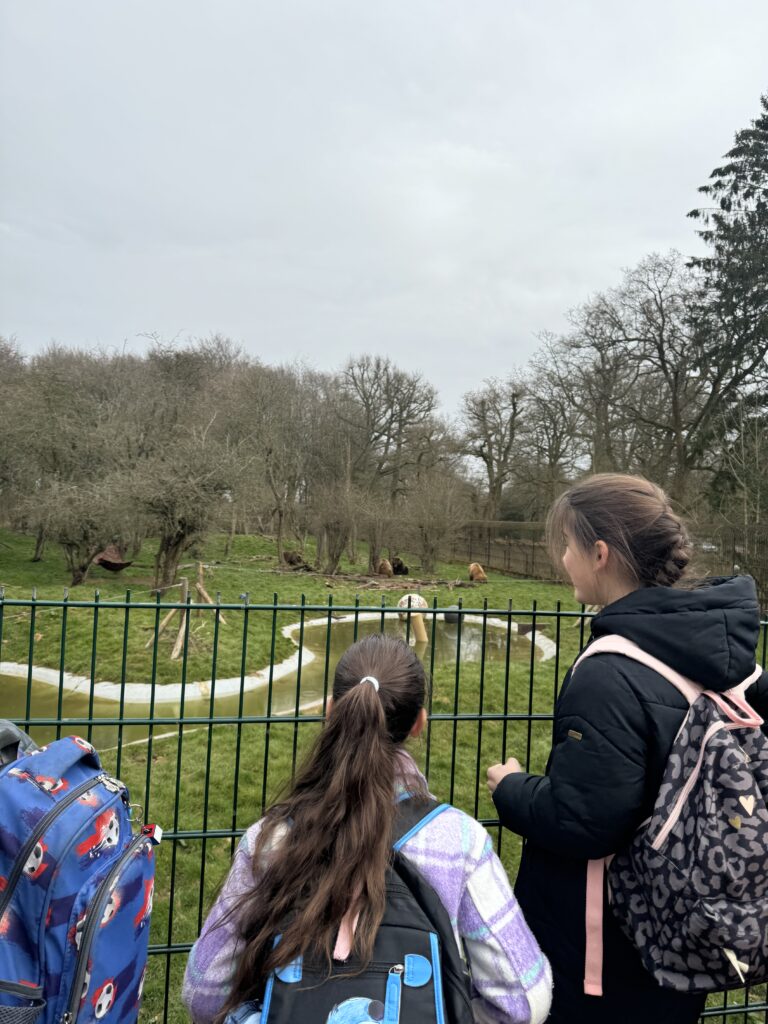
Year 5 had a brilliant time at the zoo. The children enjoyed the workshop about enclosures and got to see a variety of animals including bears, chimpanzees, lion cubs, giraffes, penguins, rhinos and tigers.

Uncategorized,Year 5 Blog

Year 2

7th February 2025Lisa Ely

Year 2

The children have started 2025 with a bang! They are enthusiastic and trying their hardest, particularly enjoying the Number Bonds challenge. Please keep encouraging your child to learn their number bonds at home. We have lots of prizes up for grabs!

 English

If your child has come home talking about giraffes or sharks in the Inspire swimming pool then we do apologise! This will be because of our English unit. We have been learning how to write to inform people in English. We have written to parents to explain the dilemma of giraffes in the pool and children will soon be writing to parents as if an animal of their choice has invaded the pool too! Here is the video that the children were shown: https://www.literacyshed.com/diving-giraffes.html


Maths

It’s times tables time! The children in Year 2 have been learning their 2, 5 and 10 times tables! The children have been using counters to show equal groups as a way of visualising their times tables. Please encourage your child to login to their TTRockstars account so that they can develop fluency in maths.


Reading

We have been learning about the book The Secret of the Black Rock. Our curious character, Erin Pike, with her striking white hair, is on a quest to uncover the mysterious black rock. However, her exciting adventures lead her to the dangerous sea, leaving all the children wondering and on the edge of their seats! The children have loved reading this story and we can’t wait to explore what happens next. Here are some pictures of intensity scales of Erin’s feelings that we completed in one of our lessons.

Computing

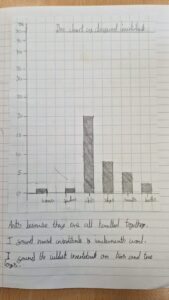
We started off the year learning all about spreadsheets. The children collected data from their class about the types of houses that children live in. We then presented this data on our computers. Here are some of our pictograms:


PE

The children have really been enjoying learning about balance through their gymnastics unit in PE. They are making sure that they perform quietly and with pointy toes – all whilst making sure that they are showing balance.


Science

In Science children are learning about animals and their habitats. They have learned about things that are alive, dead and have never been alive. Ask your child what they know as they have shown a great interest in this. They recently enjoyed exploring the school grounds to identify minibeasts and describe the habitats they live in. This topic will continue next half term when the children will be lucky enough to enjoy a visit to Whipsnade Zoo. 

Uncategorized,Year 2 Blog

Year 2

7th February 2025Lisa Ely

Year 2

The children have started 2025 with a bang! They are enthusiastic and trying their hardest, particularly enjoying the Number Bonds challenge. Please keep encouraging your child to learn their number bonds at home. We have lots of prizes up for grabs!

 English

If your child has come home talking about giraffes or sharks in the Inspire swimming pool then we do apologise! This will be because of our English unit. We have been learning how to write to inform people in English. We have written to parents to explain the dilemma of giraffes in the pool and children will soon be writing to parents as if an animal of their choice has invaded the pool too! Here is the video that the children were shown: https://www.literacyshed.com/diving-giraffes.html


Maths

It’s times tables time! The children in Year 2 have been learning their 2, 5 and 10 times tables! The children have been using counters to show equal groups as a way of visualising their times tables. Please encourage your child to login to their TTRockstars account so that they can develop fluency in maths.


Reading

We have been learning about the book The Secret of the Black Rock. Our curious character, Erin Pike, with her striking white hair, is on a quest to uncover the mysterious black rock. However, her exciting adventures lead her to the dangerous sea, leaving all the children wondering and on the edge of their seats! The children have loved reading this story and we can’t wait to explore what happens next. Here are some pictures of intensity scales of Erin’s feelings that we completed in one of our lessons.

Computing

We started off the year learning all about spreadsheets. The children collected data from their class about the types of houses that children live in. We then presented this data on our computers. Here are some of our pictograms:


PE

The children have really been enjoying learning about balance through their gymnastics unit in PE. They are making sure that they perform quietly and with pointy toes – all whilst making sure that they are showing balance.


Science

In Science children are learning about animals and their habitats. They have learned about things that are alive, dead and have never been alive. Ask your child what they know as they have shown a great interest in this. They recently enjoyed exploring the school grounds to identify minibeasts and describe the habitats they live in. This topic will continue next half term when the children will be lucky enough to enjoy a visit to Whipsnade Zoo. 

Uncategorized

Year 6 Spring blog

7th February 2025Sabreen Parkar

Welcome to Year 6’s third blog post of the year! What a busy half term it’s been, especially with the start of our SATS boosters. We’re absolutely delighted to see so many children turning up regularly—thank you all for your fantastic support! The children have been working exceptionally hard, both in class and during their before and after school sessions. We couldn’t be prouder of their dedication and progress across all subjects. Now, it’s time for a well-deserved break! We hope everyone enjoys the half term and comes back refreshed and ready for the next challenges ahead.

ENGLISH

Reading

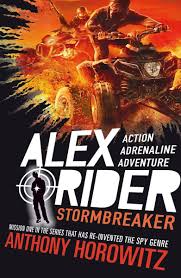
In our reading comprehension lessons, we’ve been diving into the thrilling world of Stormbreaker by Anthony Horowitz. Over the past few weeks, we’ve followed the journey of fourteen-year-old Alex, who gets recruited by MI6 in quite an unexpected twist. Equipped with some fantastic secret gadgets, he’s on a mission to investigate Herod Sayle, a rather mysterious figure who’s offering brand-new Stormbreaker computers to every school in the country.


We’ve really enjoyed exploring Alex’s character and examining the intriguing personalities of others throughout the story. Making comparisons with other books we’ve read has sparked some lively discussions! Our inference skills were put to the test as we delved into the narrative, questioning the author’s choice of language. We even tackled some tier two vocabulary, and it’s been great to see everyone trying to use these words in their own writing. Our teachers have loved listening to our fluent and expressive reading – it’s truly been engaging!

Writing

Our Creative Writing Adventure!

This term in English, we dove into the fascinating world of flashbacks in our stories. To be honest, it was quite tricky trying to keep our readers hooked while making sure they knew exactly when a flashback kicked off and when it wrapped up. We also experimented with building atmosphere to really set the scene for our narratives and practised using flashback signposts—talk about a challenge!

One of the highlights of our learning was the ideas and planning party. We gathered with friends, bounced around some incredible story concepts, and struggled to pick just one to write about in the end! It was such a creative buzz! Some of us opted to use dialogue to advance our stories, while others got adventurous by switching between tenses—how clever is that?
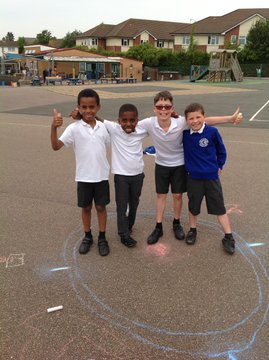
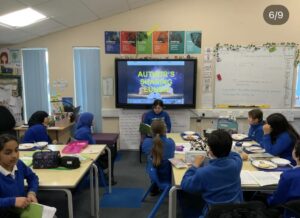
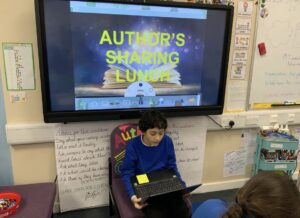
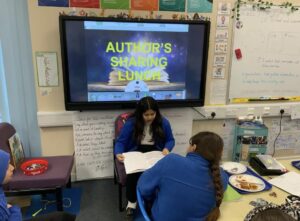
Our narratives ran the gamut from suspenseful tales to thrilling adventures, and even heartwarming stories about friendship. A few were autobiographical-drawing upon some emotional family memories, whilst others drew inspiration from our favourite films. We published our works in a range of formats that felt personal to us: some of us typed them up, others illustrated them, and a few even made books. The absolute cherry on top was an author’s sharing lunch with Mrs Parkar—what an absolute delight!

Mapping the World: Our Latest Adventure in Geography

This term, we’ve dived into a fascinating unit of work called “Mapping the World.” It’s been a brilliant journey exploring different types of maps, from topographical and thematic to street and political maps. Each format has its own unique features that tell us something special about our surroundings.

One of the highlights was learning how to read ordnance survey maps. These maps are like treasure maps, filled with symbols and details that help us navigate the great outdoors. We spent time deciphering common symbols, which sparked some lively discussions and plenty of “ah-ha!” moments. Who knew a simple triangle could represent a hill?

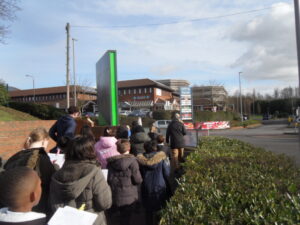
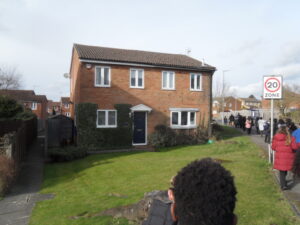
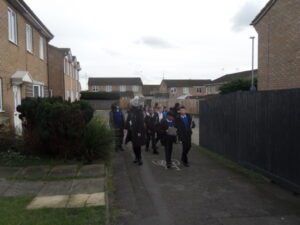
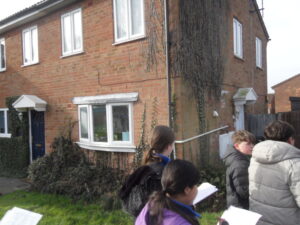
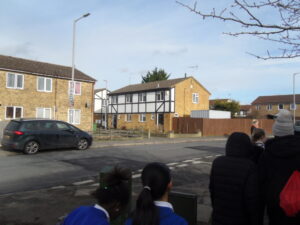
To wrap it all up, we took our learning out into the field. Our outdoor adventure involved investigating various house types in our local area, and it was eye-opening! We discovered how the architecture and style of homes reveal so much about the socio-economic geography around us. It was amazing to connect our classroom knowledge with the real world, reinforcing the idea that maps are not just tools but gateways to understanding our community. Overall, it’s been an engaging and enlightening unit that has certainly piqued our curiosity!


Maths

Ratio

In Year 6 mathematics, the concept of ratios is introduced, providing pupils with essential skills for understanding relationships between quantities. The ratio symbol, represented by a colon ( : ), allows learners to express comparisons succinctly.

We have been looking at how ratios can be closely associated with fractions, as they both illustrate a relationship between two values. For instance, a ratio of 2:3 can be understood as two parts of one quantity to three parts of another. This foundational knowledge serves as a precursor to more complex applications, such as scale drawings, where pupils utilise scale factors to represent real-life objects accurately.

Understanding similar shapes is a pivotal aspect of ratio work; our students learn that corresponding sides of similar figures maintain consistent ratios. For example, if two similar shapes have a ratio of 1:2, any side of the first shape will measure half of the corresponding side on the second shape.

Pupils are also challenged with a variety of ratio problems, reinforcing their skills in practical contexts. Further, they tackle proportion problems, which often require them to determine unknown quantities based on given ratios. Through these activities, students develop a robust understanding of ratios, forming an essential component of their mathematical toolkit.

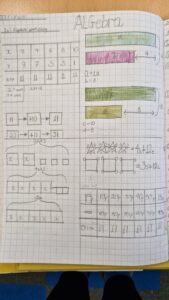
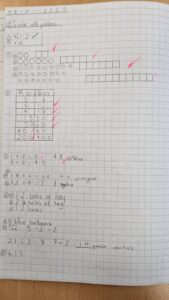
Algebra

In Year 6, our pupils are introduced to the foundational concepts of algebra, which play a crucial role in their understanding of mathematical relationships and problem-solving skills. A key component of the curriculum is the use of function machines to represent and manipulate algebraic functions.

Students begin with 1-step function machines, where they learn to apply a simple operation to an input value, yielding an output. This concept then progresses to 2-step function machines, involving two operations that help pupils develop more complex reasoning skills.

Forming expressions represents another critical skill, as students learn to construct mathematical phrases using variables. Substitution is introduced in tandem, allowing learners to replace variables with specific values, thereby simplifying expressions for evaluation.

Pupils also engage with formulae, understanding how equations represent relationships between different quantities. This lays the foundation for forming equations, which they subsequently solve; initially focusing on 1-step equations before advancing to 2-step equations, enhancing their problem-solving capabilities.

Moreover, students are tasked with finding pairs of values that satisfy given conditions, and they learn to solve problems involving two unknowns. This holistic approach equips Year 6 pupils with the essential skills and confidence required for further study in mathematics.


Decimals

In Year 6, the curriculum places significant emphasis on understanding and manipulating decimals, an essential skill that underpins many mathematical concepts and real-life applications. Pupils are first introduced to rounding decimals, a fundamental ability that allows for simplification of numerical values, enhancing mental arithmetic skills and promoting estimation.

As students progress, they learn to add and subtract decimals, which aids in grasping the concept of a decimal’s place value. This understanding extends to multiplying decimals by 10, 100, and 1,000. Such operations require students to move the decimal point to the right, fostering a deeper comprehension of the relationship between whole numbers and decimals.

Conversely, when dividing decimals by these factors, pupils experience moving the decimal point to the left, solidifying their grasp of division in a practical context. Furthermore, multiplying and dividing decimals by integers allows for essential interactions with larger datasets, which is particularly relevant in problem-solving scenarios.

An emphasis on contextualised multiplication and division of decimals enables students to apply their knowledge to real-world problems, such as calculating finances or measuring distances. Mastering these skills ensures that pupils are well-equipped for the complexity of secondary education and daily life.

Science

As part of our ongoing curriculum, we are delving into the fascinating world of living organisms. Understanding how we can arrange organisms into groups forms the foundation of our studies in biology. The term “organism” refers to any living thing, which can be categorised broadly into three primary groups: plants, animals, and microorganisms.

Classification, the process of arranging organisms based on their physical characteristics, plays a vital role in scientific inquiry. Groups of organisms that can reproduce to create offspring are classified as the same species. This methodical approach allows scientists to name, study, and discuss organisms more precisely, aided significantly by advancements in microscopy.

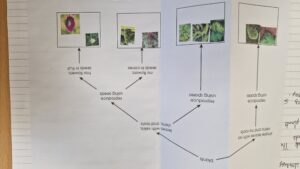
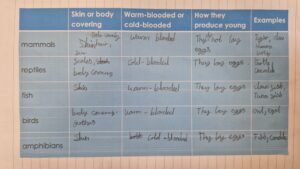
In exploring vertebrates—animals that possess a backbone—we can organise them into five distinct categories: mammals, fish, birds, reptiles, and amphibians. These categories further reveal that vertebrates can be classified as warm-blooded or cold-blooded, and they may reproduce through live birth or by laying eggs.

Conversely, invertebrates, which lack a backbone, include groups such as arthropods, molluscs, and annelids. For instance, arthropods can be subdivided into insects, arachnids, and crustaceans.

Plants, too, offer a rich field of study. They can be classified into flowering and non-flowering varieties, with flowers serving the vital purpose of attracting insects for pollination.

Lastly, we focus on microorganisms—tiny organisms often visible only under a microscope, such as bacteria and viruses. While some microorganisms can be harmful, others are beneficial, highlighting the need for us to understand how to protect ourselves from detrimental forms.


Empathy

Our value for this half term is empathy. It is vital that we explore the concept of empathy. Empathy, at its core, means seeing the world from another person’s perspective. This understanding of others’ feelings not only enriches our interactions but also plays a significant role in our emotional well-being.

Research has shown that cultivating empathy can lead to positive feelings, such as being helpful and understanding. When children learn to empathise, they are better equipped to build meaningful friendships. Establishing connections with others fosters a sense of worthiness, love, and care, while also promoting emotional stability and calmness in challenging situations.

To illustrate the power of empathy, we can look to historical figures like Mahatma Gandhi, whose commitment to understanding others’ plight was instrumental in his pursuits for justice and peace. His life exemplifies how empathy can drive meaningful change.

I encourage you to engage your children in conversations about empathy. Consider asking them how they can apply this vital skill in their daily lives. Together, let us cultivate a more empathetic community and support our children in understanding the world around them.


Uncategorized,Year 6 Blog

Year 1 blog post

17th September 2024realsmart admin

Hello welcome to my blog post sjh dbfjdjhsbdjfb shbfjhwb fhbwhejf bjweh bfhwbfhjweb fhwebfjhwe bfbwehj fbhfbjw vfwbfwbfwjehfb wjhbf jabdjsbbfsjhd fbsdhjb fhjsdb fsbjfbsjdbjsbjhb

Hello Summer hand drawn brush lettering. logo Templates. Isolated Typographic Design Label with black text and yellow doodle sun icon

this is joe bloggs sasd afsdfd fsd fsds sd

sdsdsdsdsd
sdsd
Autumn 1 units 2024.docxDownload
Uncategorized

Off To A Flying Start In EYFS

27th November 2023Farhana Siddique

Maths
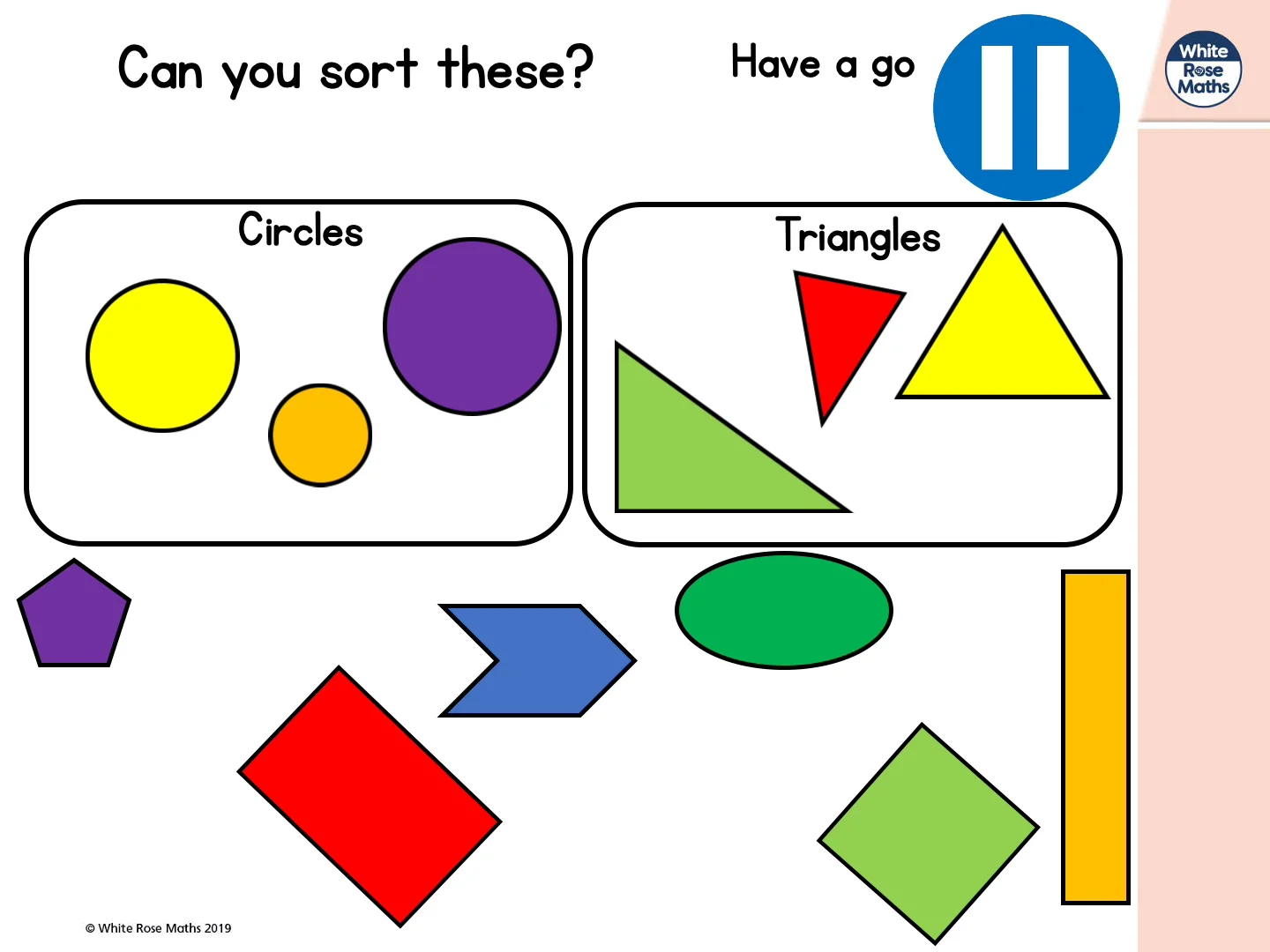
The children have been focusing on 2D shapes (circle and triangle). Children  have had the chance to explore the school to identify different shapes  in the environment. We have also progressed in teaching numbers up to 5, where they have been challenged to subitise and write these numbers correctly. Some children are beginning to think critically by explaining different ways to make a number using different mathematical resources and learning strategies.

Year 1 - Week 6 - Alternative Lesson 3 - Sort 2–D shapes on Vimeo

English
Throughout Autumn term 1, the theme for English was based on ‘traditional tales’. Children read different stories such as; Goldilocks and the Three Bears, The Gingerbread Man and The Three Little Pigs. When introducing these stories we had various visits from the main characters to spark the children’s interest and create excitement for their new story.

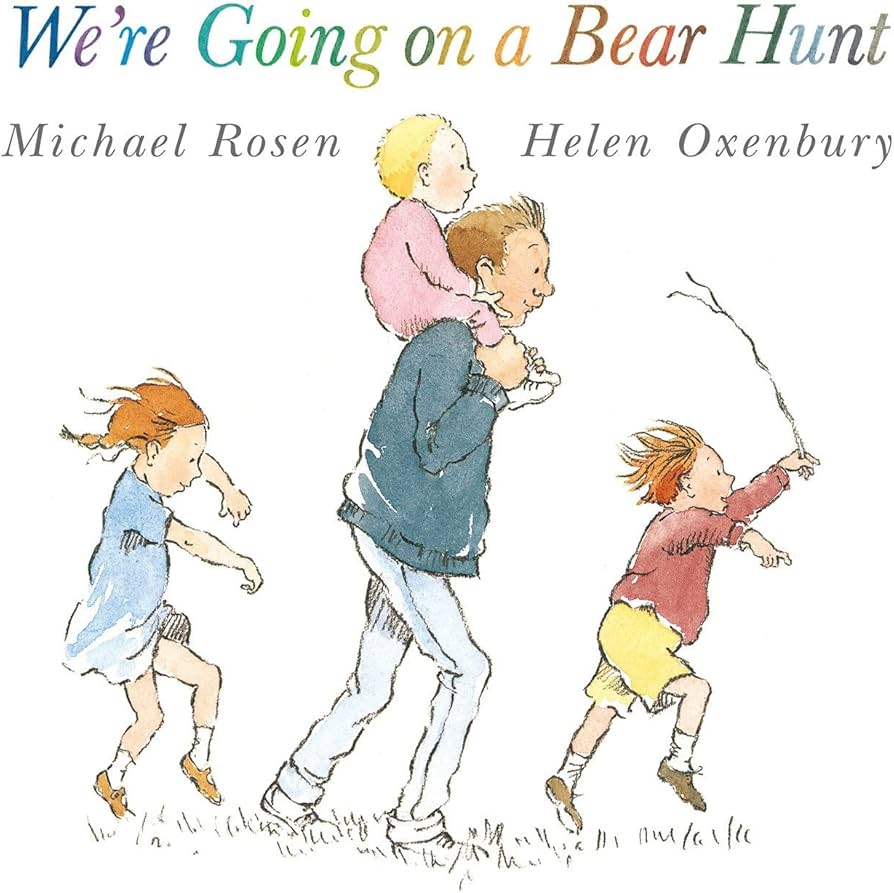
This term the children have learnt the story ‘We’re Going On a Bear Hunt’. They were able to sequence the story and retell it. They have also had the opportunity to innovate the story where they changed the character of the Bear to an animal of their choice. Next week the children will be doing some poetry.

We're Going on a Bear Hunt: 1 (CBH... by Rosen, Michael

Understanding the world
This term the children have learnt about Diwali. They had the opportunity to investigate and explore the different traditions that take place during this festival. They created their own Rangoli patterns, henna designs and diva lamps.

Continuous Provision
In continuous provision children secured their learning through the concept of play and exploration. We increased children’s knowledge through incorporating the theme of the week within the set activities. This enhanced their curiosity and interest.

Phonics
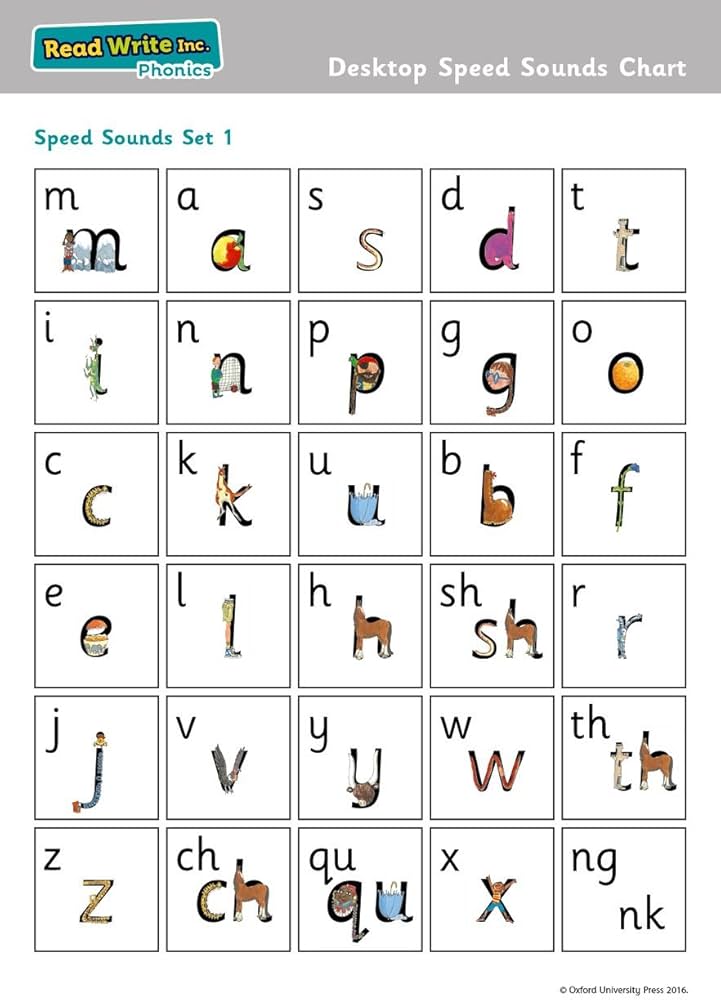
In Phonics children have been taught all of the set 1 single sounds. They are beginning to blend the phonetic sounds together to help read CVC words.  Read Write Inc. Phonics: Desktop Speed Sounds Chart Pack of 10

Reading
This term we have explored the story Owl Babies. Children investigated the setting and retold the story using their imagination. They also captured how the characters felt throughout the story.

Owl Babies by Martin Waddell & Patrick Benson | Early Years Resources

EYFS Blog,Uncategorized

The last few weeks in Year 4!

29th June 2023Daniel Pateman

What an incredible few weeks it has been! It’s coming to the end of term and we are starting to get the children ready in Year 5. It has been a great year with some truly memorable moments. This is what we have been up to recently:


The Linking Network

Elm and Willow class have been part of a national program called The Linking Network since the start of the year. They have been taking part in activities with Warden Hill Junior School and over the past two weeks they got to reunite with their peers from Warden Hill. ImageImageImage


Anglo Saxon trip

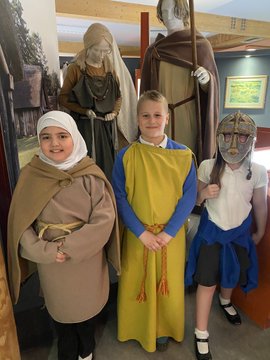
We were lucky enough to visit West Stow earlier in the term to find out how the Anglo Saxons used to live! We looked at a model village, artefacts and were able to ask one of the experts our questions.

ImageImageImage


Pizza making!

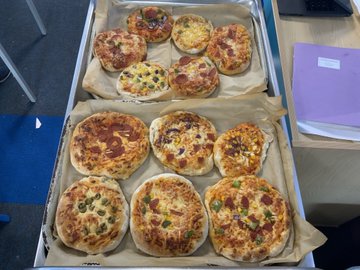
Throughout the next few weeks, each class will be designing and making their own pizzas! Elm class were the first to put on the chef aprons. The children were very happy with how their pizzas turned out – we hope you were able to try a slice!

ImageImage

Uncategorized,Year 4 Blog

Year 6 Summer 1 Blog

12th May 2023Adam Omer

We would like to say thank you to all the children for their hard work and effort during the SATs week. Punctuality and attendance this week has been outstanding and I’m sure the children will have done their best to make themselves and the school proud.

Since our return to school after the Easter holidays, we have obviously  been quite heavily SATs focused. The children have been working hard in our maths, reading and grammar revision lessons in readiness for this week’s tests.

In maths the children have looked at a wide range of topics including geometry, calculations, statistics, measures, shape/angle and position and direction. We have continued to practise the main four operations – addition, subtraction, multiplication and division. The children have been building their confidence in these areas.

In reading we have been practising SAT type comprehension questions and also started a new class reader called Kensuke’s Kingdom by Michael Morpurgo which has been a real favourite of previous year 6 classes and has also grabbed the attention of our current year 6ites. It tells the story of a young boy stranded on a desert island and how he learns how to survive with the help of a stranger.

We have been looking at Grammar content in part of our English lessons in readiness for the Grammar SAT and revising areas of punctuation and spelling too. Tenses and the passive and active have been areas we have concentrated on (go on, look up what is meant by the passive and active).

In English we have been looking at the language of persuasion and how it is used to advertise a product. The children are currently in the process of creating a written advert for a gadget to be used by a spy.

In other areas of the curriculum

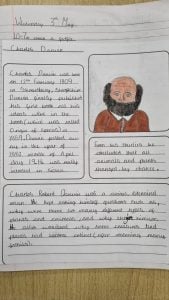
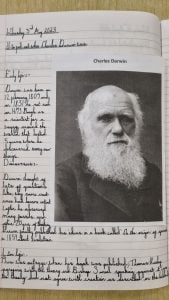
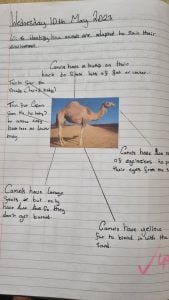
In science we have been learning about the science behind Evolution. We have studied famous people linked to the topic (Mary Anning and Charles Darwin), understood that the term evolution means changes which happen over time and that animals and plants adapt to suit the environment they live in.

Before half term,, we will be setting the children off on a homework topic based on evolution. The children will be researching some animals and creating a presentation about how they are adapted to their habitats. Look out for the details on this project homework coming home!

In RE the children have been looking at Justice and Poverty and what is meant by the terms fair and unfair. They have looked at some charities working to eradicate poverty in the world and discussed issues facing street children in different parts of the world.

In French, we have started to look at the vocabulary of Family and will be learning how to talk about our family members.


What is coming up

We will continue to work on our adverts in English lessons and continue reading Kensuke’s Kingdom in reading. Our next English writing topic will be explanation and we will be looking at strange contraptions and explaining how they work.

In maths, we are going to be working through some projects dealing with real life issues ( the one entitled Bakery interests me especially if it has anything to do with cakes! ).

In science we will be doing some practical work on electricity ( no rewiring of buildings or setting up of appliances will be happening ( :  )

In French we will carry on looking at The Family and in computers we will study Spreadsheets and Coding.

Year 6 will also be preparing for their end of year presentation to parents and school which this year is entitled I’m an 11 year old Get Me Out of Here!  There will be music, singing and acting from your children and maybe … the teachers.


Uncategorized,Year 6 Blog

Year 3 Blog

11th May 2023Jordan Clarke

It has been a very busy half term in year 3. We performed our Year 3/4 eco play which was absolutely fantastic, and I’m sure you would agree that the standard was exceptional if you came and watched it! The children did superbly and had a great time both practising and performing. A big thank you to the parents for helping learn these lines and bringing your children into school for the evening performance, it is very much appreciated! Let’s have a look at what the children in year 3 have been busy learning this half term…


Maths:

In maths the children were learning about fractions at the beginning of the half term. They worked really hard on this topic and lots of the children were really confident with explaining some of the key vocabulary and using this correctly in class discussions. It was really pleasing to see the hard work all year 3 classes put in to this topic and it really showed in the work they produced. We finished the half term on ‘mass and capacity’. We explored different ways we can measure involving both mass and capacity and the difference between the two. We looked at a variety of containers and had a go at estimating the volume and comparing them in groups. We also looked at reading scales accurately and finding out how to read and calculate the intervals on scales.


Reading:

We have started a new topic of poetry which the children seem to be really enjoying. There have been opportunities for the children to explore different poems by the author Valerie Bloom, and we have looked at some key vocabulary. We have worked together as a class and also in pairs, to come up with ideas for our own poem that we are writing. The children had to think of their favourite things that are calming, peaceful and that embody the 5 senses. By the end of the half term, the children would have written their own poem with 3 verses, all about someone special in their lives.


English:

Linking with our eco play, we have started a topic for the last few weeks on playscripts. This has been well received by the children as they are familiar with scripts, and have been given the opportunity to think about well known traditional tales. They were able to select their own traditional tale and transforming this into a playscript. We had think about the features of a playscript, as some of these rules are very different to other genres of writing we have done before.


Art:

In art, we have been looking at the style of pointillism and looking at the work of Georges Seurat. The children really enjoyed this and we used cotton buds to create the pointillism style. We designed flag bunting, colour wheels and we then looked at different ways of mixing colours and shading using this technique. We finished this topic by creating our own picture of our choice, using the style of pointillism.


We wish you and your families a very relaxing and enjoyable Easter break, and look forward to welcoming the children back in the summer term.


Uncategorized,Year 3 Blog

Post navigation

← Older posts
Contact
Twyford Drive, Luton,
Bedfordshire, LU2 9TB

01582 616101

[email protected]

SWGfL Report Harmful Content
School website powered by realsmart brand logo